Exploring educational technology

Month: January 2026

Reflection #2: Generative AI

After lots of reflection and experimentation this week, I still have mixed feelings about generative artificial intelligence and its role in education.

It’s that easy! GenAI applications for teacher productivity

I think that a huge piece of GenAI’s allure for teachers is its convenience. In our AI workbook activity, I used MagicSchool to create a pretty thorough inquiry-based science unit in minutes. MINUTES! Burnout is a major issue, especially for early-career educators. GenAI could ease the burden on teachers by automating time-consuming tasks. This kind of support could free us up to spend more time and energy supporting students socially and emotionally – something that AI can’t do!
UDL and personalized learning

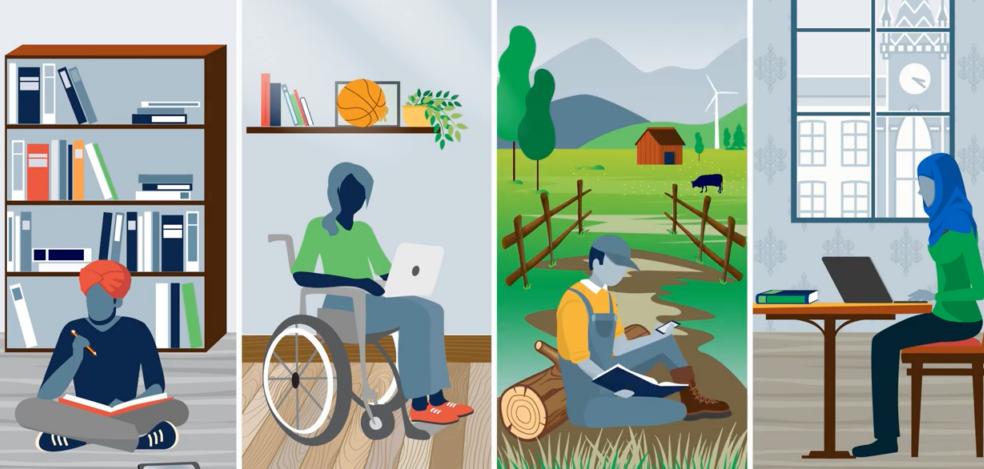
I’m also excited about GenAI’s potential to assist with Universal Design for Learning (UDL) and personalized learning. I love the idea of using AI to tailor lessons to students of different abilities, learning styles, and interests. One of the greatest challenges of teaching is meeting all students where they are and providing the right level of challenge for each learner. In that sense, AI feels aligned with concepts like Vygotsky’s Zone of Proximal Development. GenAI could help teachers scaffold. I tried this out with Magic School by getting it to simplify a text about biomes to a lower reading level. I think this is a great application of GenAI – using it to simplify text helps to remove an unnecessary barrier for students who have trouble reading.

Critical thinking?

One of my biggest worries is the potential decline in critical thinking and creativity. I often catch myself leaning on AI to complete tasks that I am fully capable of doing on my own. If I, as an adult, am susceptible to this habit, I worry even more about how it might affect students. Since GenAI is so convenient and pervasive, both students and educators could become dependent on it… what might that dependency mean for the development of writing skills, creativity, and critical thinking?

A study out of MIT suggests that using ChatGPT for writing tasks may reduce brain activity, mental engagement, and critical thinking! Paritcipants who relied on ChatGPT also produced less original work compared to those who used a search engine or wrote without assistance. And it appears that these results were not very reversible – people who’d relied on Chat in the past but were no longer using it STILL showed poorer critical thinking skills. There is still ongoing research into this, but it raises concerns about overreliance on AI, especially for students who are still developing as thinkers and readers.

FAKE NEWS?!

I’m also concerned about misinformation. AI has become alarmingly good at generating text, images, and even videos that look just like the real thing (see: creepy Sora videos like the one below). Without strong media literacy skills, students may be particularly vulnerable to believing or spreading false information. This makes explicit instruction around misinformation and AI literacy absolutely essential.

Fake video of a dog spewing water at a nice older gentleman created using Sora (it wasn’t me – I promise!)

What about the environment?

I’m also conflicted about the environmental impact of AI. Large-scale AI systems require a lot of resources (water and energy). I said this already in my AI Workbook assignment, but at times, using AI to create teaching materials feels hypocritical to me. I want to teach my students about the climate crisis and help them build a sense of connection to the land, so I feel uncomfortable knowing that my use of AI is contributing to the problem. This tension is something I haven’t fully reconciled – and I honestly don’t know if I can! For example, I’m feeling guilty about how much water I probably wasted creating a cutesy AI-generated photo of me in Sweden for my Inquiry blog 🙁

Photo from https://news.mit.edu/2025/explained-generative-ai-environmental-impact-0117

Back to pencil and paper?

I work as an EA on call, so I’ve gotten to see a wide range of approaches to AI use in classrooms. Some teachers have responded by going fully analog for certain subjects. For example, an English 8 teacher I worked with restructured her course so that the summative assessment, an essay on The Outsiders, is now handwritten in class rather than taken home. I understand the intention behind this shift – it’s getting hard for teachers to see if students are cheating/plagiarizing with AI. However, I’m not convinced that outright banning GenAI (or designing assignments to make AI use impossible) is the best solution.

AI Literacy

AI is obviously not going away. I want students to learn how to use GenAI properly, safely, and ethically so that they are prepared for the world they are entering. This means teaching responsible use rather than avoidance. Students need to understand what AI is and how it works. We need to be clear that even though interacting with AI may feel like talking to another person, it is not a substitute for human connection. Students should be encouraged to reach out to real people when they need help or support.

My mum is a teacher at Ridgeview Elementary School in West Vancouver and a former colleague of Cari Wilson, who has created excellent AI literacy resources for K–12 students. My mum recently shared one of Cari’s AI lessons with her Grade 4 class, and I’m hoping to get a copy of it from her. I’m also excited to attend Cari Wilson’s professional development session, Student AI Literacy Lessons, through Focused Education Resources in February.

Overall, I’d say that I’m both excited and terrified of the applications of generative AI, in the classroom and beyond.

Free Inquiry #1: Duolingo, kaffe, and fika

Welcome to my inquiry! Välkommen! My name is Macy and I’m a teacher candidate at the University of Victoria. I’m gearing up to my first practicum in April in Stockholm, Sweden! That’s right – Sweden!

AI-generated photo of me in Sweden! Prompt given to ChatGPT: Generate photo. Put her in a blue knit sweater and a big chunky yellow scarf. Background: streets of Gamla Stan, Stockholm. Make it snowing. She is also holding a Swedish flag. 

When I started the BEd Post-Degree Professional Program, I didn’t know that there was an option to go abroad for the 6-week practicum. Part of why I applied was on a whim. I’ve barely traveled at all – unless you count when I was a young child (my dad played professional basketball in Europe and I lived in England and Spain as a youngster). I’ve essentially been in North America ever since, save a school trip to Venice in 2018). In fact, I haven’t been on a plane since 2019 – that’s one of my go to two-truths-and-a-lie statements. I feel like I haven’t had the transformative experience of solo travelling that a lot of my peers have had. Although I’m so grateful for my life in Victoria, I think a little exploring is long overdue.

My bigger reason for choosing an international practicum placement was to broaden my horizons. I’m ashamed to say that I know very little about Swedish culture. However, I have always been curious about Scandinavia and interested in its history (Vikings!!!). I’m professionally fascinated by the school systems in Scandinavia. I remember meeting an elementary school friend who’d recently emigrated to Vancouver from Finland. Alex constantly raved about how school back home was so much better. I’ve heard this statement echoed countless times since – in news articles, in sociology textbooks during my undergrad, and by pretty much anyone who I’ve told I’m headed to Sweden for my practicum.

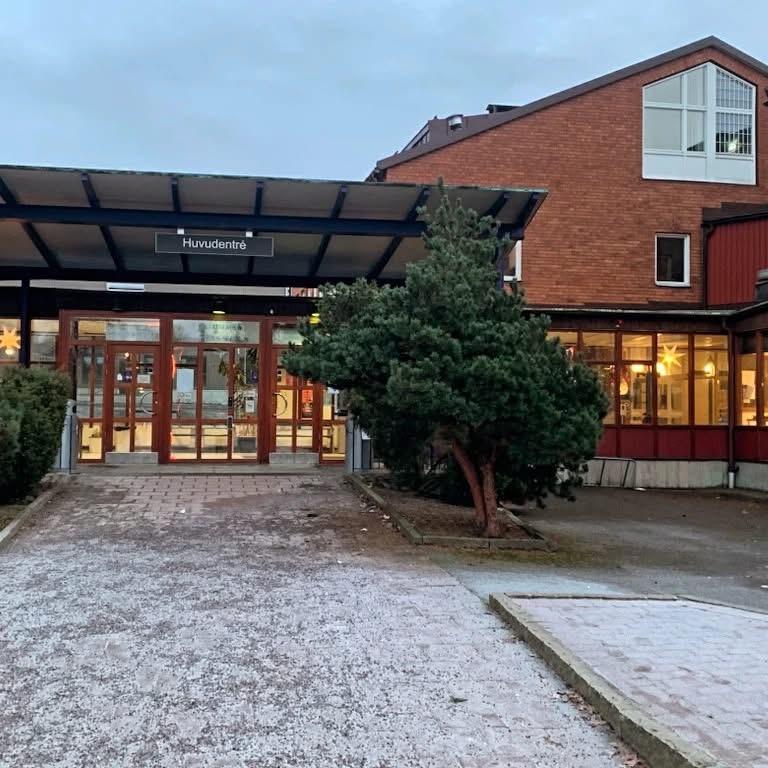
Eklidens Skola, one of the largest high schools in Stockholm, where I’ll be a student teacher this April/May!

An Inquiry into Swedish Culture and Language

I hope to learn from my mentor teacher (and students) at Eklidens Skola in Stockholm and bring what I learn back to my colleagues here in Canada. I also hope to gain experience and understanding of what it’s like to be new to a country and unfamiliar with the language. That way, I can better understand and support my future students who are newcomers and/or learning English as an additional language.The crux of my inquiry will be exploring Swedish language and culture. I have always been interested in language acquisition, but I only speak English. I figured this inquiry project could be a chance to…

  • Challenge my brain: Research from York University suggests that learning a second language in adulthood can thwart the onset of dementia. I have experience with Alzheimer’s disease and I am very interested in preventive health and all the ways that people can boost their cognitive reserve.
  • Prepare for the culture shock that might await me in Stockholm: in my next blog post, I plan to investigate the idea of cultural intelligence (CQ) and develop knowledge of behavioural preferences/values in Sweden that might differ from what I’m used to in Canada.

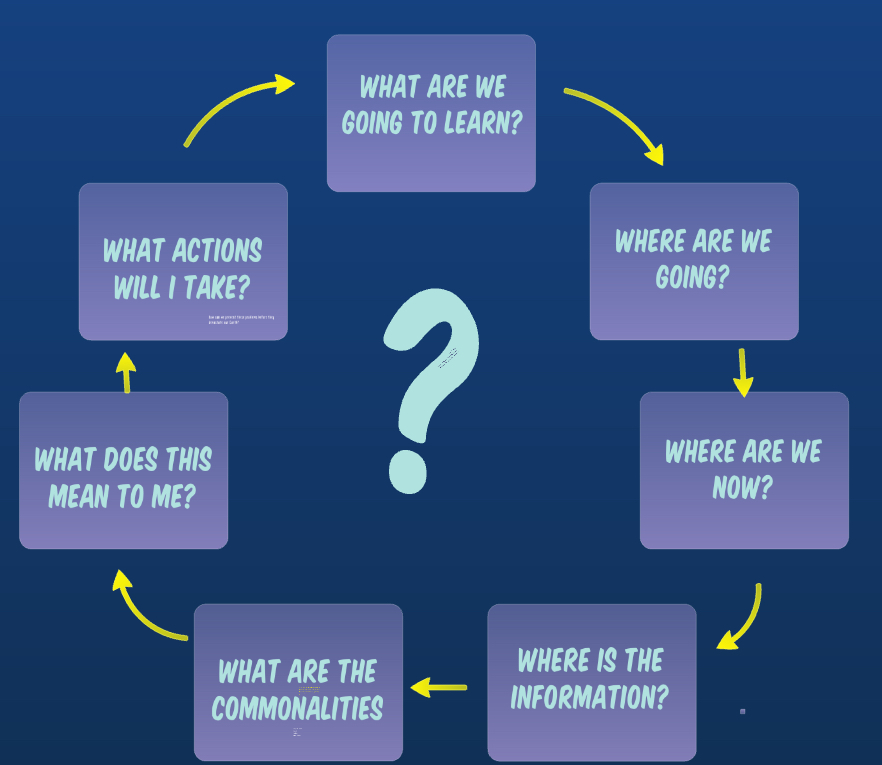
Inquiry-based learning centres around driving questions. I started my inquiry project with a topic – Sweden! But I’ve been developing some open-ended questions to guide my research:

How might someone acquire a rudimentary understanding of a new language, starting from scratch, as an adult?

guiding question #1

How are Swedish and Canadian culture different and the same?

Guiding question #2

How does the landscape affect how people gather and celebrate?

GUIDING question #3

Learning Swedish

I started my Duolingo journey this week, and I have a 7-day streak – yay! The Duolingo owl is persistent, and the app does a great job of gamifying language learning. Gamification is actually something I’m very interested in as a pedagogical approach (maybe I’ll write another blog post about this later). I am getting frustrated with how slowly Duolingo is progressing… it doesn’t feel like I’m levelling up. That being said, I do feel like I have a strong grasp of the few words it has taught me so far.

The first thing Swedish Duolingo teaches you is how to order items at a café or a bar, which I find interesting. Here are the words I’ve learned thus far:

vatten – water

öl – beer

vin – wine

bröd – bread

mjölk – milk

kaffe – coffee

hej! – hello

hej da! – goodbye

tack – thank you/please

välkommen – welcome

och – and

Typing, selecting, and speaking the word kaffe over and over again on my iPad had me thinking that coffee must be an important part of the average Swede’s daily life. A family friend of mine is in the Gustavson School of Business here at UVic, where it’s common for students to do semesters abroad, and she studied in Sweden this fall. I remember seeing an Instagram post of hers about a Swedish custom called fika.

“kaffe och mjölk”

Practicing my pronunciation – play the voice recording to learn how to say coffee and milk in Swedish! It’s quite close to English.


Turns out that Duolingo is onto something – coffee IS big in Sweden!

Image from https://zwarteroes.nl/en/blogs/koffie-feiten/what-is-swedish-fika-coffee?country=NL

Fika

A cherished tradition where Swedes take a mandatory daily break to sip coffee or tea and have a sweet treat with friends, family, or colleagues. Fika is a “coffee break,” but it’s equally (or more) about social connection and pausing to rest than it is about hitting your caffeine quota.

Swedish sweet treats: kanelbullar (cinnamon buns) and chokladbollar (chocolate balls)

Read more about fika here: https://visitsweden.com/what-to-do/food-drink/swedish-kitchen/all-about-swedish-fika/

Now, if you’ll excuse me, my PDPP peers are waiting to chat with me over coffee! I think it’s interesting that coffee and treats with friends has a name in Sweden – that signifies its importance and the fact that catching up is a priority! I think I’m going to like fika!

Tack! Hej da!

Macy

Week 1: Thoughts on the Open Inquiry Model

Touring the Pacific School of Inquiry & Innovation (PSII) was an enlightening experience. So, I want to centre my first reflection around inquiry-based learning – specifically, the (pretty radical) model that Jeff Hopkins and his colleagues have developed at PSII.

Do we need to reimagine education?

We need to reimagine education. The current model has kids slipping through the cracks. Not everyone’s support needs are met, and gifted students are often not challenged. Once you’ve learned something, it’s done, and we don’t leave a lot of room for deeper exploration, creativity, or extension.

On top of that, the world is changing rapidly, so of course the ways we prepare young people to interact with and make sense of the world must change as well. We are living in a time shaped by rapidly evolving technologies (case and point – AI!), accompanied by a renewed importance of communication and face-to-face skills. Our learners are inheriting unprecedented global challenges, e.g., the climate crisis, political instability, and the lasting impacts of the COVID-19 pandemic.

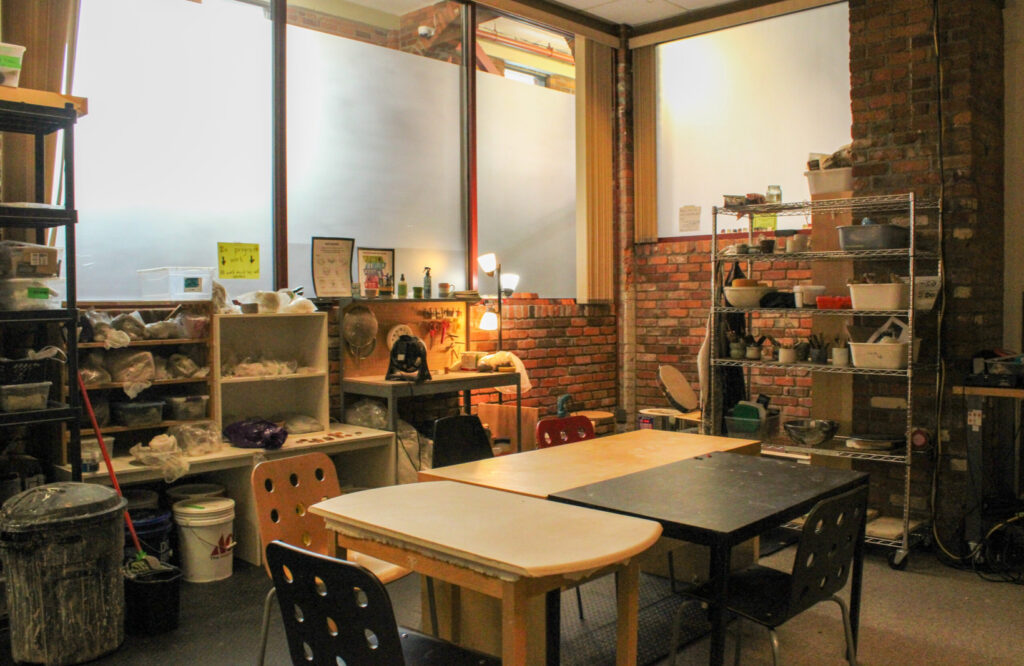
At PSII, we saw groups of students working together on cross-curricular and self-directed projects, using tech like laptops and tablets.

PSII felt a lot like a real-world workspace. Walking through the school had the same vibe as touring this AI startup that some of my peers from high school created… it was cool to see small groups of students chatting and plotting ideas on a whiteboard, others hunched over computers developing code, and still others poring over books in the library. Encouraging project-based learning is obviously a great way to prepare kids for how work gets done in many fields (especially corporate jobs) – I can’t think of anyone who reads a textbook and gets tested on their retention for a career! With the unprecedented access we have to information today via search engines and generative artificial intelligence chatbots, this kind of learning is redundant – you can just look it up if you forget! Instead, we need to give opportunities for students to discover and practice skills that help them tackle projects and problems.

Obstacles to shaking it up

One major obstacle teachers face when trying to reimagine education is interacting with existing systems. What is the use of teaching differently if students are just going to pass into typical lecture- and test-based learning in high school and university?

I feel torn between wanting to do what I think is best for kids – I LOVE the PSII model and want to incorporate as much open inquiry into my teaching as possible – and wanting to equip students for success within the world we’re currently living in.

a summary of my thoughts on adopting a full-on open inquiry model

We need to recognize the greater forces at play – unfortunately, students still need to do well on tests to get into universities, and need high GPAs for grad school, internships, and jobs. We are operating within a competitive, capitalist, individualistic society, where grades still have consequences. I think all the time about how I got offered a scholarship to UVic essentially just based on my high school average (arguably the least interesting part of my high school experience). Of course, I want my students to find success in the world we’re in.

A challenge of shaking up education is that other systems are slow to shake alongside you. Other teachers at your school, or schools in your district, might be hesitant to adopt changes, and then your students could end up at a disadvantage.

That being said, things are definitely moving in right direction. For example, universities like UBC are including a personal profile in their application – this would be a great place for students to showcase their discoveries and growth through the inquiry projects they engaged in throughout their time at school.

I think we need systemic change at all levels of the education system – unfortunately, the ability of a single teacher to shake up how we educate the next generation is limited. But, if we work together, we can get there – Jeff’s work at PSII and with teachers around the world is a success story!

Concerns and excitement

One concern I have about an inquiry-based approach is whether students might miss key foundational skills. How does inquiry-based learning work when helping young students develop literacy skills? What about math?

I also wonder if, when learning is so self-directed, students might only study what they are already interested in (or in other words, comfortable with) and not push themselves to try things they might actually end up enjoying or being good at. I would like to learn more about how teachers in inquiry schools balance student vs autonomy and making sure all students are challenged (think Vygotsky’s zone of proximal development).

At the same time, I am really excited about the freedom, and choice this model offers. The student buy-in at PSII was amazing. Students seemed more accountable for their learning when they got to direct it. It also felt much more like the real world. Learning was active, collaborative, and meaningful, rather than passive and performative. I have a little bit of experience with inquiry as a student… my Grade 5, 6, and 7 teachers were huge proponents of inquiry-based learning and I LOVED it – especially because it gave young me a chance to explore my specific interests. I found a couple of my old inquiry projects and you can peruse them if you’re curious to see what inquiry in a 2010s classroom looked like 🙂

I’m excited to learn more about inquiry and bring it into my own classroom soon! That’s it for now!

© 2026 Learning with Macy

Theme by Anders NorenUp ↑