Exploring educational technology

Category: Free Inquiry

This is the category to apply to your Free Inquiry posts.

Free Inquiry #8: Swedish cuisine (the dessert to my 8-course inquiry meal)

Hej! Välkommen to my eighth and final inquiry blog about Sweden. You can learn a lot about a culture by looking the foods that people enjoy. So, that’s what I’ll do for my final post. I’m hoping to gain familiarity with local delicacies to prepare me for what will be on offer in Stockholm, as well as to learn about the significance and history of Swedish foods.

Lingonberries

Alt text: a bowl overflowing with small, red, round lingonberries. Image fromhttp://healthline.com

Tiny tart red berries that are often made into jam and juice. Many Swedes have fond childhood memories of picking lingonberries in the forest. In researching lingonberries, I learned that Sweden has something called “the right of public access” – allemansrätten. This means that everyone has the opportunity to roam freely and enjoy nature – you can camp anywhere and hike anywhere – forests are not private or crown land.

More about lingonberries

Pickled herring

A favourite in the smörgåsbord (Swedish buffet). Pickling has played a role in Swedish life for hundreds of years. Swedes have been pickling since the Middle Ages, mainly as a way of preserving fish for storage and transportation to inland areas. Today, pickled herring comes in many flavours, such as garlic, mustard, onion, and dill. It is often eaten with boiled potatoes, cheese, sour cream, and crispbread. I will NOT be trying pickled herring, as I am a vegetarian and I don’t eat fish.

Crispbread (knäckebröd)
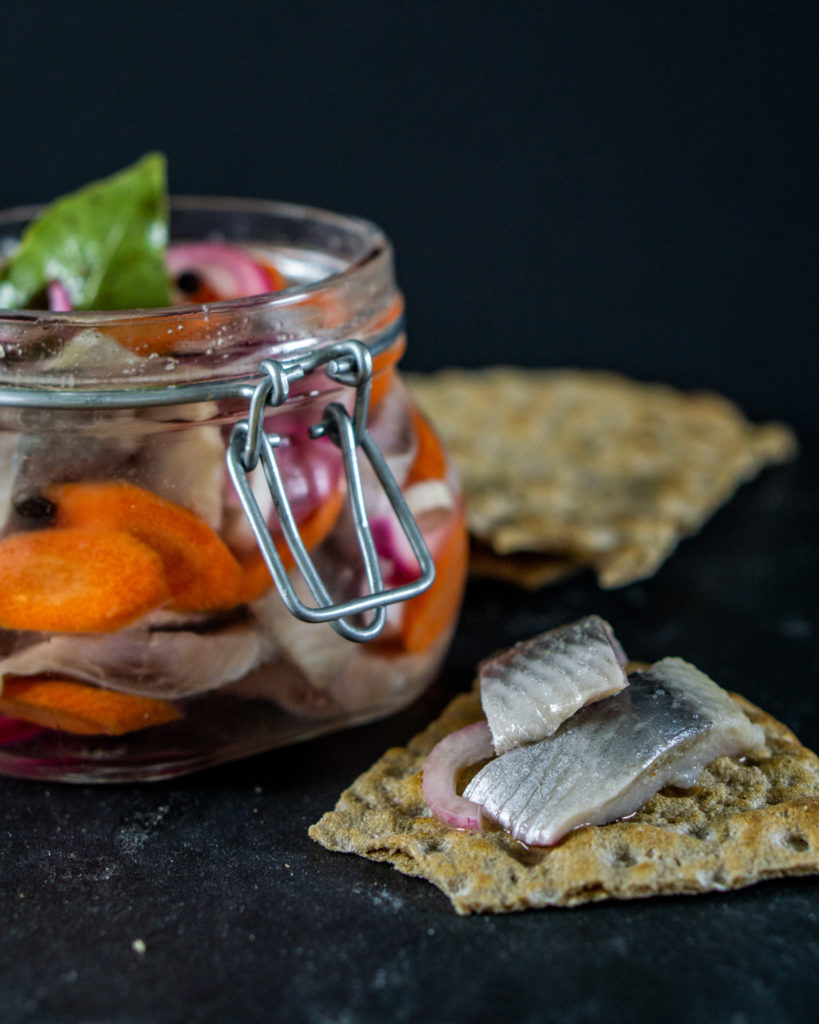
Alt text: a jar of pickled herring, next to a piece of crispbread with shiny silver pickled herring on top. Image from https://swedishspoon.com/pickled-herring/

Speaking of crispbread, I’d never heard of it until I read about pickled herring! It’s like a flat large cracker, and it is often served alongside meals. It was once considered “poor man’s food,” and people in Sweden have been baking it for over 500 years. It has an amazing shelf life – at least a year if stored properly – and you can top it with just about anything (some ideas: boiled eggs, caviar, ham and cheese, cucumber, and just plain butter). Apparently whole shelves in Swedish grocery stores are dedicated to crispbread!

More about crispbread and other Swedish foods: https://sweden.se/culture/food/10-things-to-know-about-swedish-food

Princess cake (Prinsesstårta)
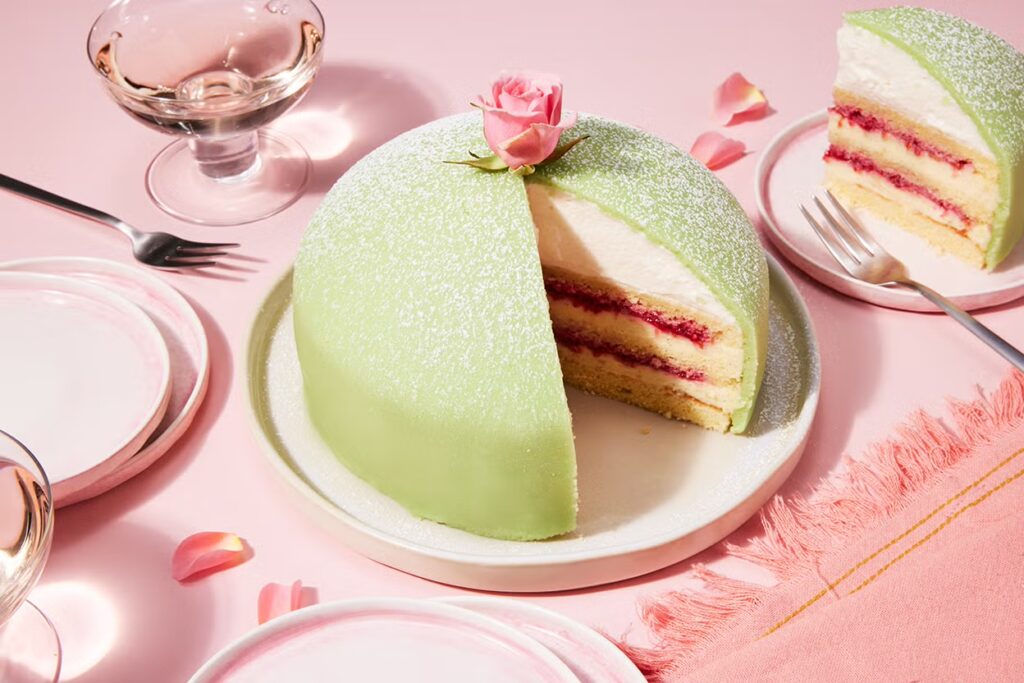
Alt text: Prinsesstårta, a domed green cake with white and pink layers inside. Image from https://www.kingarthurbaking.com/recipes/princess-cake-prinsesstarta-recipe.

A bright green cake always topped with a pink rose made of sugar. Prinsesstårta is made of layers of sponge cake, jam, vanilla custard, and whipped cream. The icing is actually a thin layer of green marzipan.

The name Prinsesstårta can teach us something about Swedish history. The first princess cake was made in t(e 1920s by a Swedish woman named Jenny Åkerström. This was during the reign of King Gustav V. Jenny was actually a teacher – she taught Prince Carl Bernadotte’s daughters, Astrid, Märtha, and Margaretha. They tried the fake and loved it so much that they inspired its name.

Princess cake is a part of many celebrations in Sweden. Green and yellow is popular at Easter, red at Christmas, orange for Halloween, and white at weddings. Swedes often bake a princess cake to mark milestones in people’s lives. My cousin Delaney just got engaged – maybe I should embrace this Swedish tradition and bake her and her fiancé Chris a Prinsesstårta!

Princess cake recipe: https://www.sprinklebakes.com/2019/01/swedish-princess-cake-prinsesstarta.html

And that is all! I’m saying my final hej då! I have truly enjoyed inquiring into Swedish language and culture through EDCI 336 and keeping this blog updated.

Bye and vi ses!

Macy
Free Inquiry #7: Stockholm to-dos

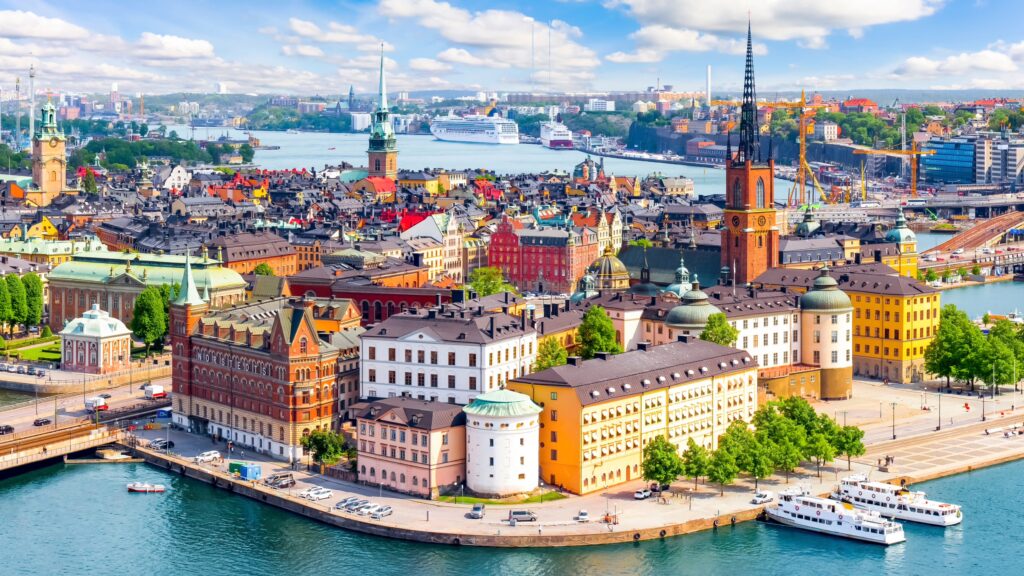
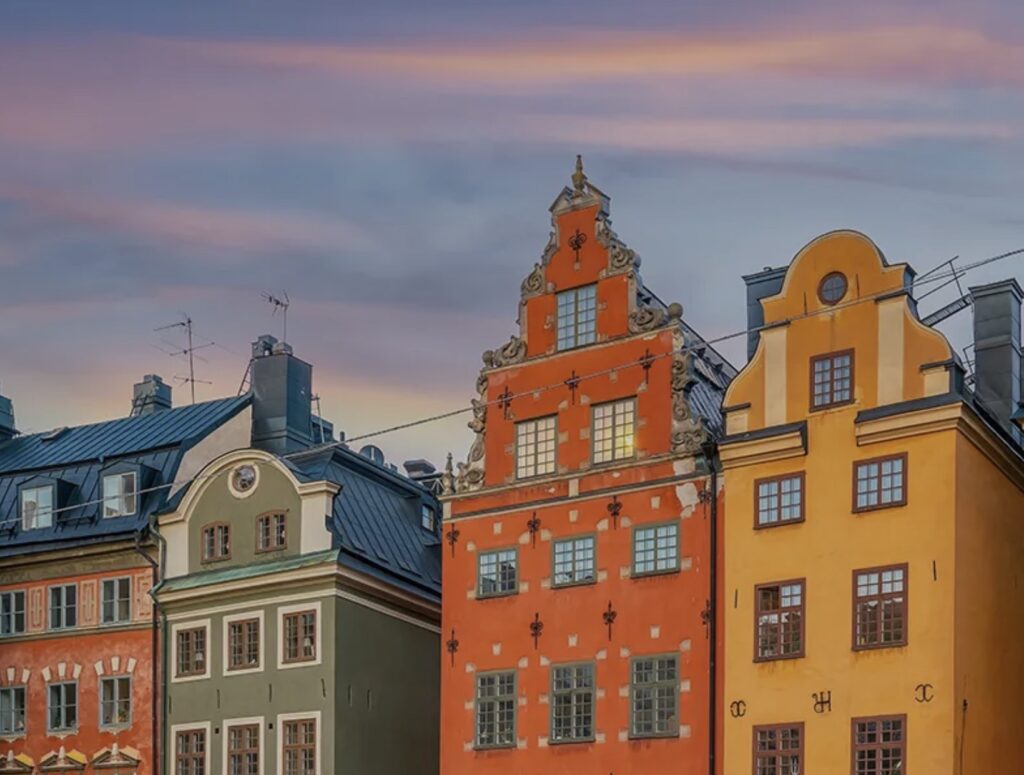
Colourful buildings in Gamla Stan, image from https://www.originaltravel.co.uk/travel-blog/why-visit-stockholm.

Hej! God morgon.

My mum gifted me a book about Stockholm for Christmas – “Top 10 Stockholm” by DK Travel. For my sixth inquiry post, I thought I would go analog and do some good old-fashioned research on life in Stockholm. So, I poured over the travel book and took notes on must-see places.

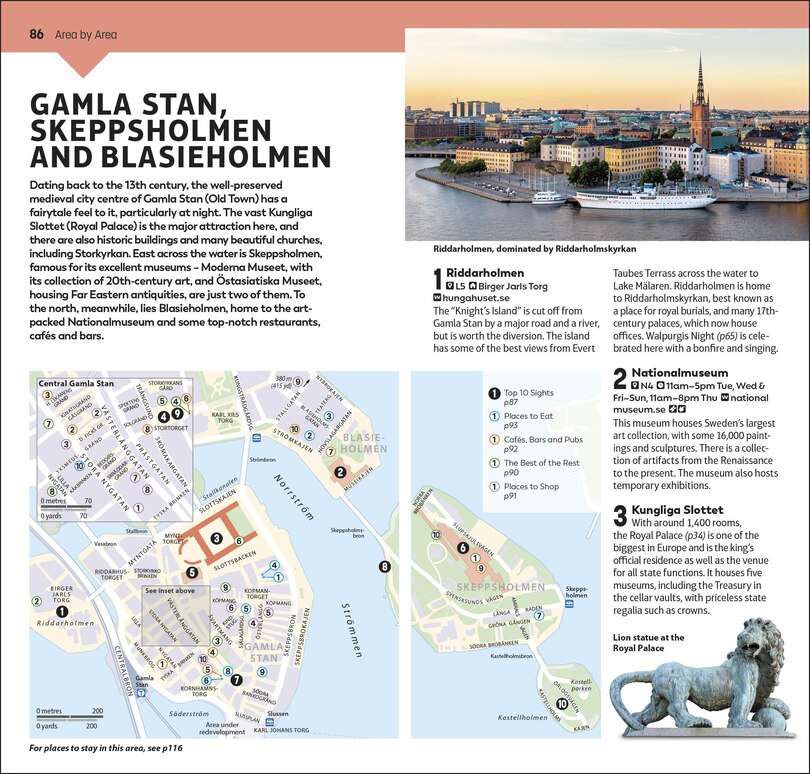
Gamla Stan (Old Town)

Stockholm’s historic centre, Gamla Stan is known for its narrow cobblestone streets and colourful buildings.

Map of Gamla Stan area from “Top 10 Stockholm”. I can legally use thus because it’s less than 10% of the source material and for educational purposes.

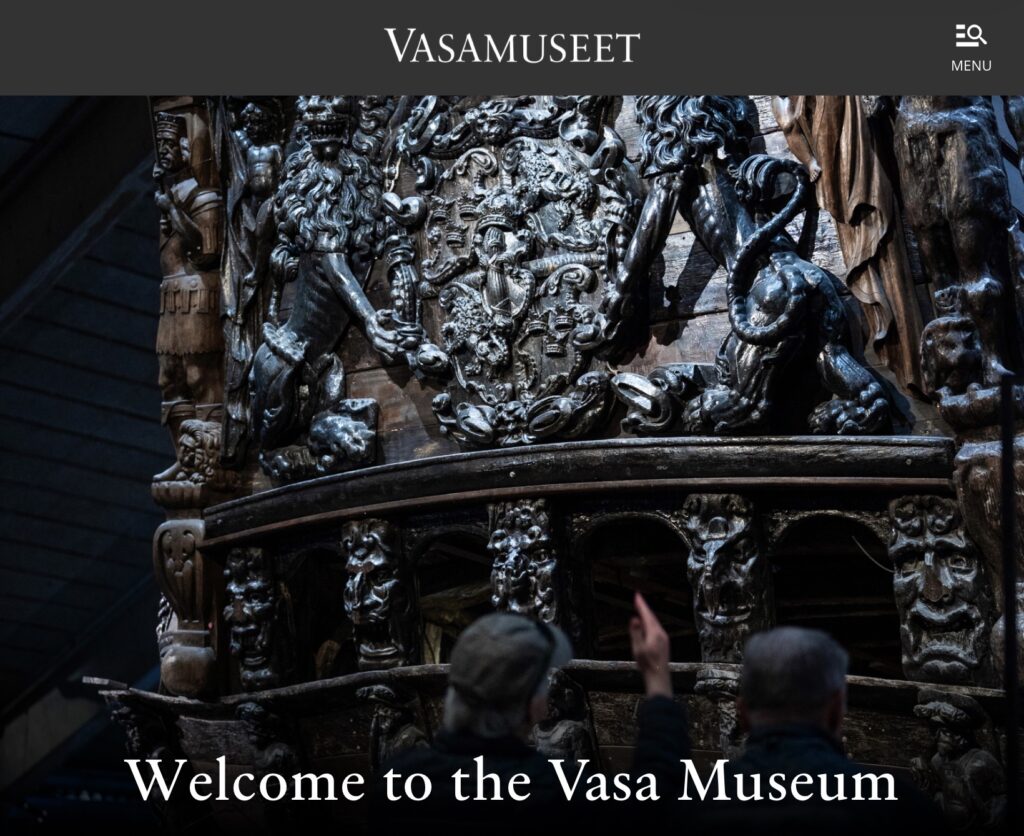
The Vasa Museum (Vasamusset)

A great place to learn about the Vikings, the Vasa Museum houses a 17th-century warship. The ship sank on its first voyage, and was miraculously recovered from the sea floor nearly completely intact. A friend of a friend recommended the Vasamuseet to me way back in October at a Halloween party, before I was even sure I’d be going to Sweden. So, a must-see!

Screenshot from the Vasamuseet website: https://www.vasamuseet.se/en

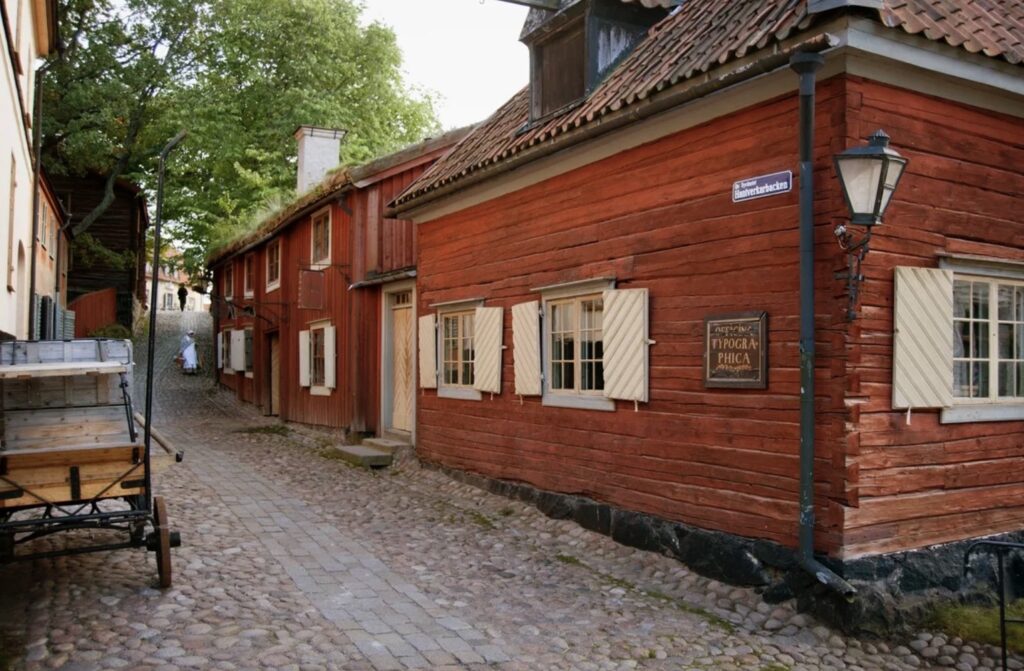
Skansen Open-Air Museum

Skansen is an open-air museum showcasing Swedish life and culture.

Photo from https://www.skansen.se/en/ by Marie Andersson.

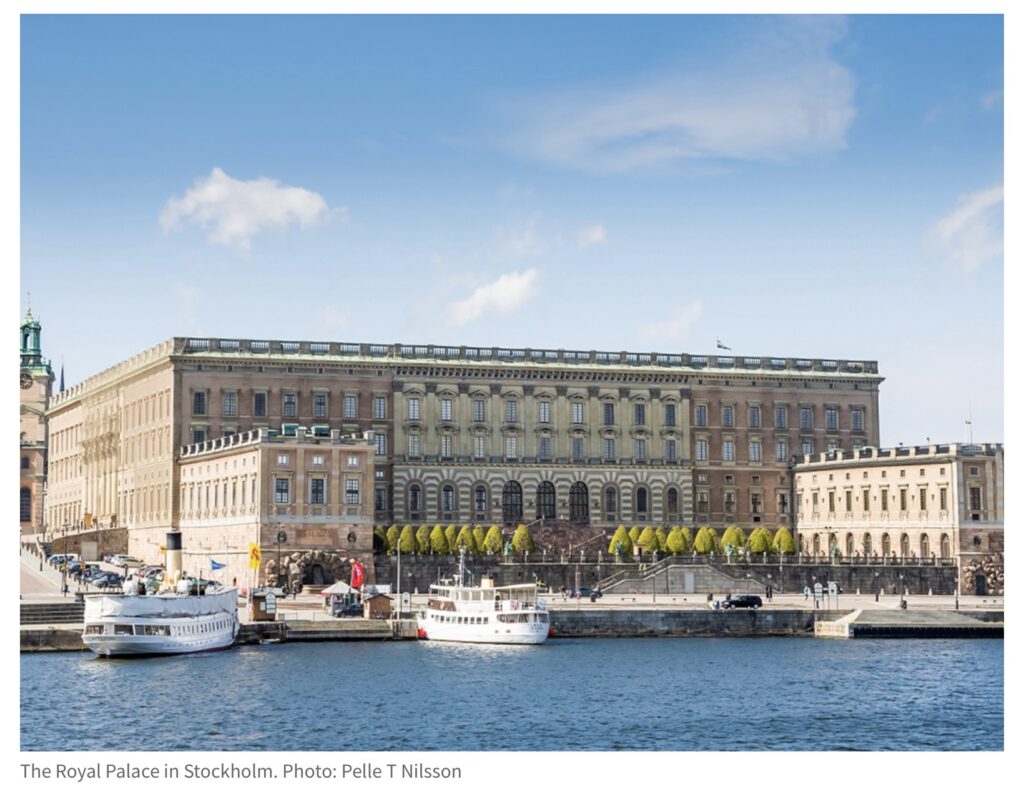
The Royal Palace

The Royal Palace is one of the largest palaces in Europe, and it is actually still used for official functions. I would love to learn more about Sweden’s monarchy and history, so I’ll be checking it out.

https://www.kungahuset.se/english/royal-palaces-and-residences

Fotografiska

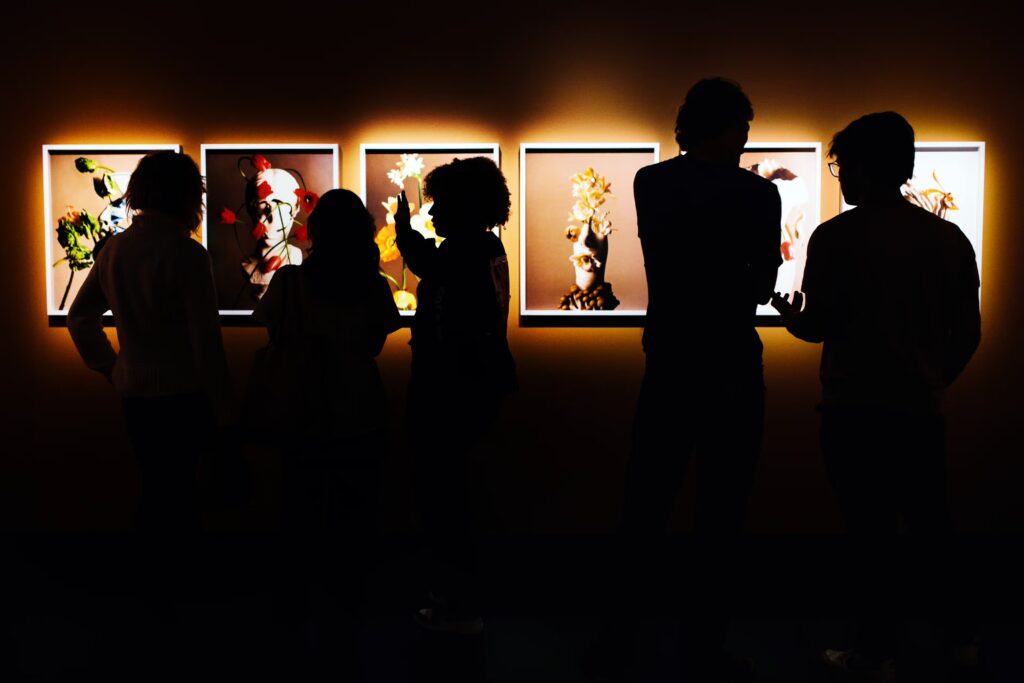
Fotografiska is a contemporary photography museum with rotating exhibitions. I would love to get more cultured and artsy during my time abroad, so I’ll check it out.

Fotografiska

https://www.fotografiska.com

ABBA The Museum

This museum is dedicated to ABBA, one of Sweden’s most iconic cultural exports. It’s interactive (I believe you can see a hologram version of the band perform!) and focuses on the band’s music and legacy, which makes it a fun addition alongside the more traditional museums.

ABBA costumes on display at the museum, from https://abbathemuseum.com/en/exhibitions

Södermalm

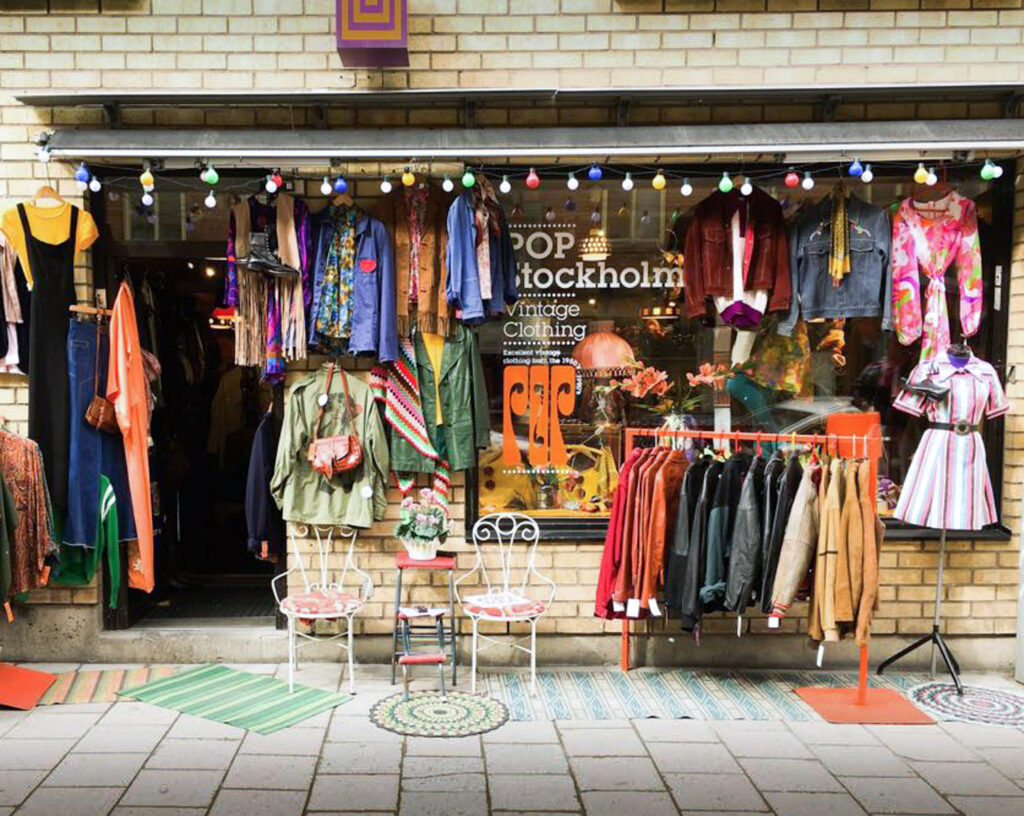
Södermalm is described as one of Stockholm’s trendier districts, known for cafes, vintage shops, and a more local feel. My friend from Sweden says I NEED to go thrifting there because the clothes are amazing.

A vintage shop in Sofo, the “trendy” district of Södermalm:https://www.city-guide-stockholm.com/en/experiences/weekend-et-holidays/article-vintage-shopping-in-sofo-the-trendy-district-of-sodermalm-19.htm

Stockholm City Hall

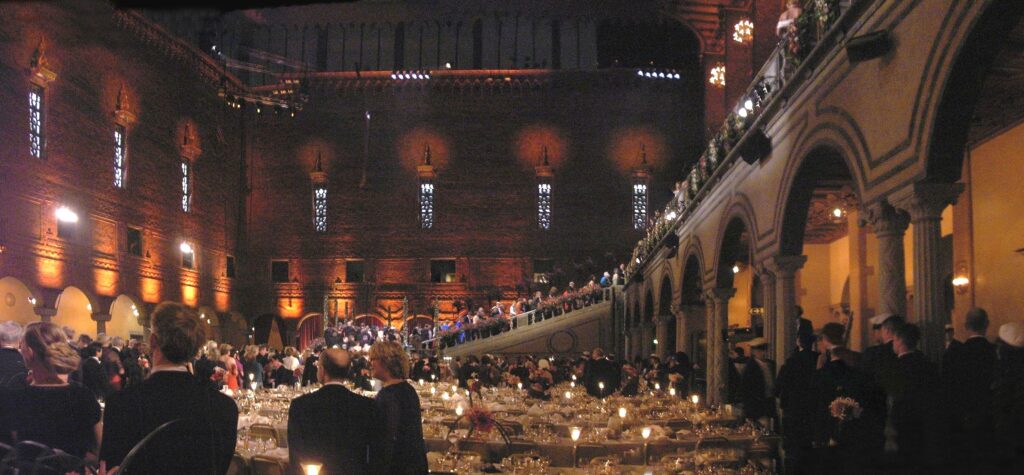
City Hall is notable not just for its architecture, but also as the venue for the Nobel Prize banquet.

Nobel Prize banquet

https://en.wikipedia.org/wiki/Nobel_Banquet

Fika (coffee and pastries) – anywhere in and around the city!

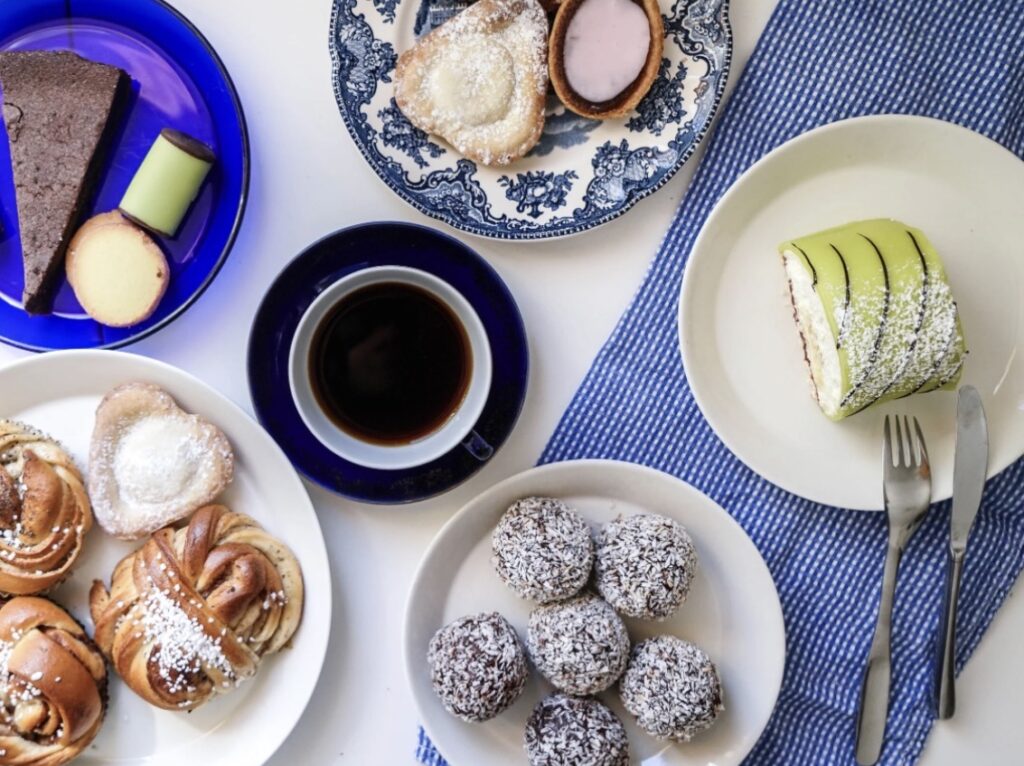
Fika is the Swedish tradition of taking a break for coffee and something sweet, often in a social setting. I wrote about it in my very first inquiry post. I’m excited to try what the local bakeries and cafes have to offer.

Traditional Swedish pastries. Image from https://www.whetstonemagazine.com/journal/the-traditional-swedish-fika-and-its-pastries

More recommendations

I also asked ChatGPT for recommendations, which kind of goes against my whole analog research operation, LOL! Here are the places I didn’t see in my travel book that ChatGPT said I can’t miss in Stockholm:

  • Monteliusvägen: A short walking path with one of the best views of the city. It overlooks Lake Mälaren and Gamla Stan.
  • Djurgården: An island that’s basically a giant green space filled with museums, walking paths, and waterfront views.
  • Stockholm Public Library: Designed by architect Gunnar Asplund, this library is known for its circular main hall.
  • Östermalms Saluhall: A food market with traditional Swedish options.
  • Kungsträdgården: A central park that’s especially nice in the spring (cherry blossoms!).
  • Gröna Lund: An amusement park that I’ve actually heard about already, from another teacher candidate who went to teach in Nacka! Apparently the students rave about it!

Free Inquiry #6: Swedish schools

Screenshot from Welcome to Nacka brochure

Swedish language learning update: I finally hit the big five-oh on Duolingo! I have been practicing Swedish for 50 days now.

My international practicum fast approaches! In exactly 3 weeks (that’s right, 3 weeks! That’s 21 sleeps!), I’ll be headed to Stockholm. Instead of doing something more immediately useful like packing, or lesson planning, I sat down this evening to research how the Swedish school system works. Education is a massive part of culture – schools as institutions reproduce and challenge cultural norms. Since my inquiry centres around Swedish language and culture, and since I’m going to be working within the Swedish school system for over a month, in UNDER a month, I thought I should know a bit more about what I’m getting into.

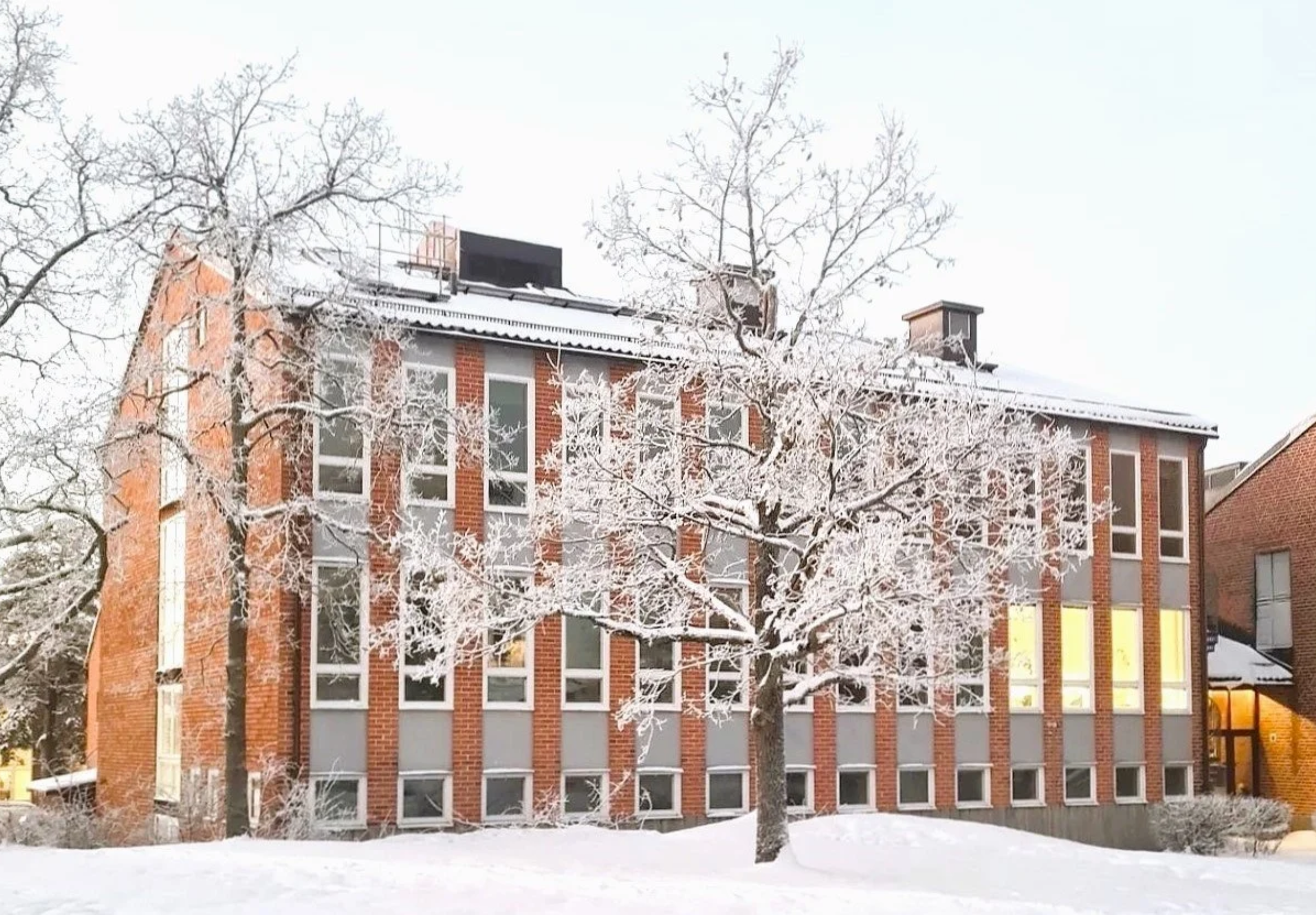
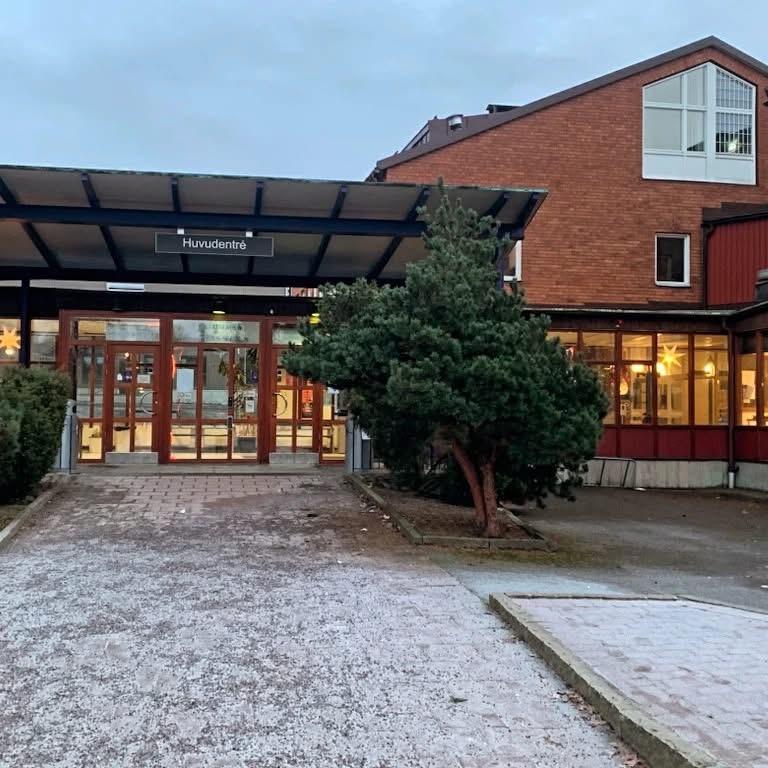
Eklidens skola, the compulsory school in Nacka, Sweden, where I’ll be doing my 6-week practicum

Image from https://www.nacka.se/valfard-skola/eklidensskola/.

The Swedish school system has three main stages: preschool, compulsory school, and upper secondary school. Preschool (förskola) is for younger kids and is heavily play-based, focused on social development more than academics. Then comes compulsory school (grundskola), which runs from about ages 6 to 15. Compulsory school is mandatory from Year 1 to Year 9. After that, students move into upper secondary school (gymnasium), which is optional. However, most students attend – the job outlook is quite competitive and gymnasium is an asset. In gymnasium, students specialize into vocational and academic streams. My mentor teacher’s son is currently in gymnasium and he wants to pursue higher education soon.

Speaking of my mentor teacher – I met Maria yesterday via Microsoft Teams. It was difficult to schedule a meeting because of the +8HRS time difference between here and Stockholm. But, I’m glad we did, because Maria is lovely and I feel less nervous about embarking on the international practicum journey now that I know at least one person who’s waiting in Sweden!

Screenshot from the World Clock app on my iPad, showing that when it is 7:46pm here in Victoria, it is the middle of the night/early morning in Stockholm (3:46am).

I’ll be teaching at Eklidens skola, which is a Year 7-9 school – the final years of compulsory education. The grade equivalent is a little different in Canada – the Swedish learners I’ll be working with would be Grade 6-8 here. One thing that really stood out from my conversation with Maria is how advanced the students seem in terms of their academics. They learn primarily in Swedish, but English is introduced early and taken seriously. Maria is an English teacher, and their English classes are much more vigorous than Core French classes in Canada. For example, Maria’s Year 9s just finished reading the Great Gatsby. WOAH! I didn’t read that until Grade 11 or 12. On top of English, most students study a third language – Spanish, French, German, Mandarin, etcetera. Being multilingual is very normal in Sweden.

Leo DiCaprio in The Great Gatsby film (image from Gold Derby)

This tells me a lot about the high expectations and support in Swedish classrooms – or, at least, at my school. The students are clearly being challenged, and rising to the challenge. Hearing that my future students are tackling the Great Gatsby in their non-native language puts things into perspective as I begin lesson planning – I can definitely aim higher than I initially thought.

It makes sense that students are successful in Sweden – their schools are well-funded. In my research, I found that Sweden uses a publicly funded system where money follows the student – government funding is based on enrollment. This is equity-focused in theory, because every student should have access to the same quality of education regardless of where they go. And, get this – school lunches are completely free! Thank you, Nordic Model! Teachers, students, and school staff all eat the same free hot lunch, which will be AWESOME!

A new focus of mine over these next few weeks is unit and lesson planning. I got some ideas from Maria…

  • Grade 7: All About Canada with a focus on Indigenous peoples
  • Grade 8: some sort of novel study (lots of freedom here)
  • Grade 9: Something to do with Shakespeare

Those are my starting points – I’m excited to start planning! Hej då!

Free Inquiry #5: Understanding current events in Sweden

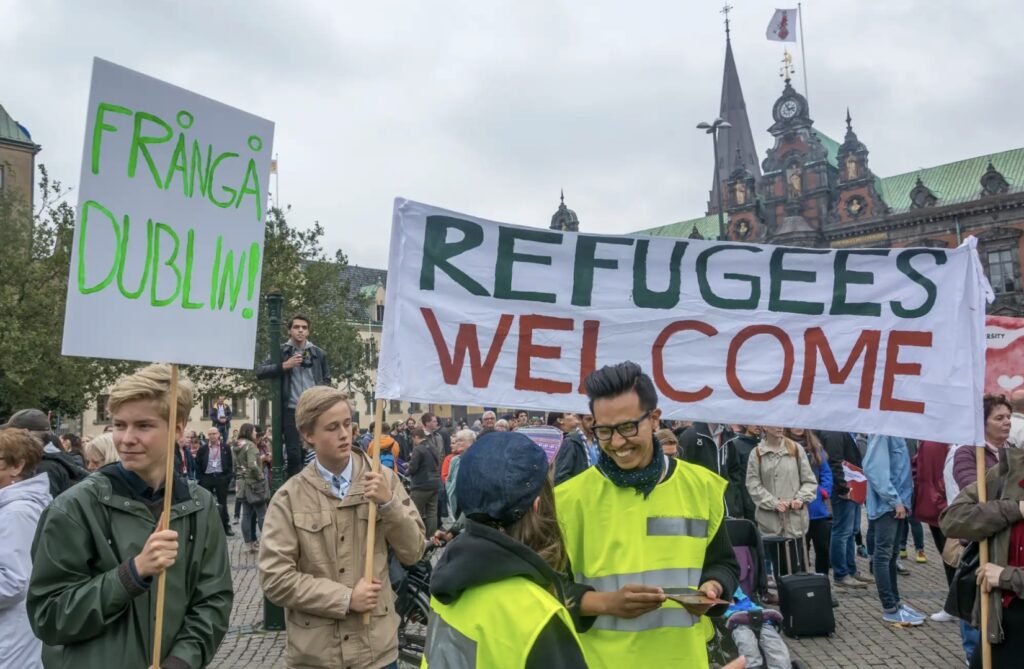
People hold banners welcoming refugees in Malmö, Sweden. From https://www.marketplace.org/story/2019/07/17/sweden-immigration-economy

Swedish language learning update

Duolingo streak: 47 days

New words unlocked:

  • Ingenjör – engineer
  • Han – he
  • Hon – she
  • Men – but
  • Bor – lives

Feeling inspired to be more knowledgable

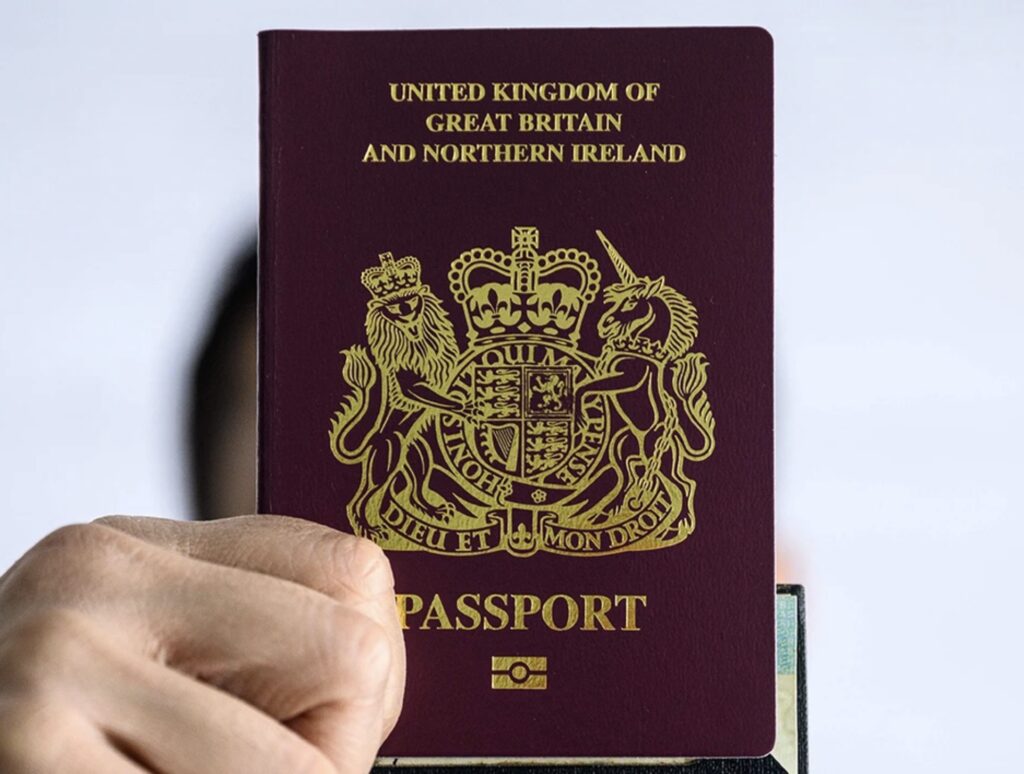
I’m a dual citizen of Canada and the UK, and until very recently I had absolutely no idea that I might not be able to enter my own country of birth using my Canadian passport. New UK travel rules mean that some British Canadian dual citizens may need to use a British passport or apply for special travel authorization, which costs nearly $2000 CAD) when entering the UK, rather than relying on a Canadian one. Reading this made me realize that I am, frankly, woefully underprepared and under-informed as my trip to Sweden rapidly encroaches. I ended up applying for a new UK passport (mine expired when I was 5 years old!) and I am praying that it arrives in time!

UK Passport. Image from https://nationalpost.com/news/canada/new-passport-rules-for-british-canadian-dual-citizens

That realization sent me down a bit of a research spiral. I started looking not only for any other bureaucratic hoops or travel rules that could potentially interfere with my practicum abroad, but also at how current global events might be shaping the lives of the people I’ll soon be interacting with in Stockholm – students, fellow teachers, and the people I’ll pass on the street, in restaurants, and bars – potential future friends.

It’s easy to get wrapped up in your own life and your own travel plans, but part of developing cultural intelligence is stepping outside of that bubble and actually paying attention. That means learning about Sweden, of course, but also paying attention to broader global issues – I also wonder how conflicts like the war in Iran might be affecting how people are feeling and living in Sweden right now.

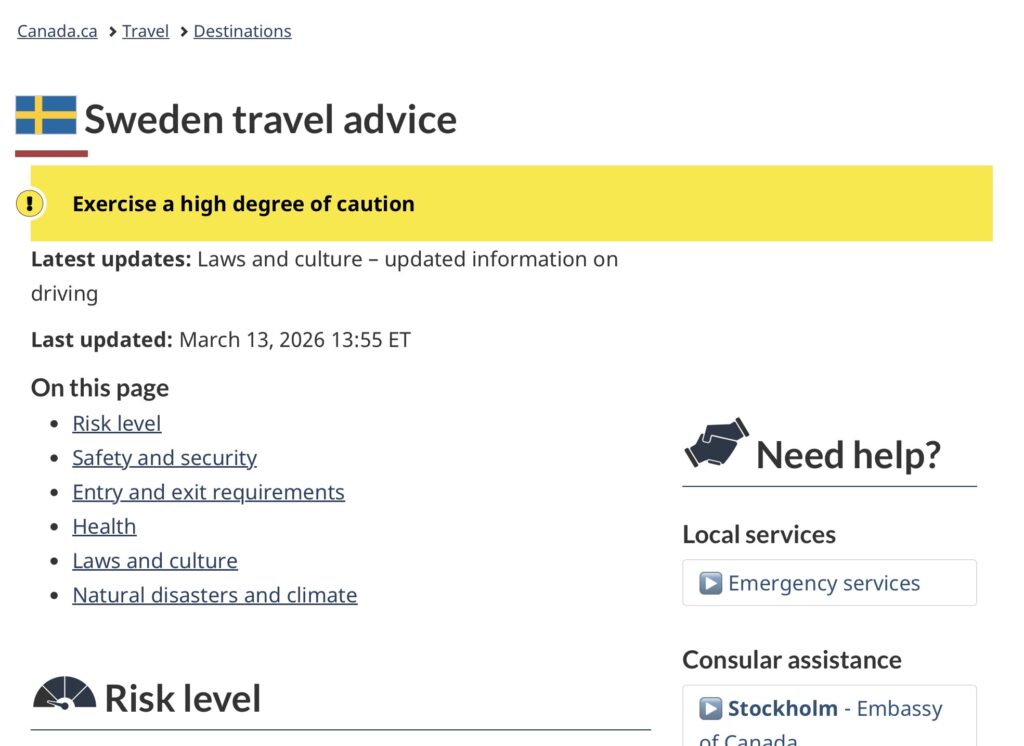
Screenshot from https://travel.gc.ca/destinations/sweden

Issues in Sweden

I started with the Government of Canada travel advisory webpage for Sweden. According to the Government of Canada’s advice for travellers to Sweden, the following issues mean that you need to exercise a high degree of caution:

Terrorism

There is a threat of terrorism in Europe. Terrorists have carried out attacks in several European cities and further attacks are likely.

Targets could include:

  • government buildings
  • schools, including universities
  • places of worship
  • airports and other transportation hubs and networks
  • public areas such as tourist attractions, restaurants, bars, coffee shops, shopping centres, markets, hotels and other sites frequented by foreigners

Always be aware of your surroundings when in public places.

Be particular vigilant during:

  • sporting events
  • religious holidays
  • major political events, such as demonstrations
  • other public celebrations

Violent crime

Organized crime-related violence occurs in the three biggest cities in Sweden:

  • Stockholm (where I’m going!)
  • Gothenburg
  • Malmö (where I plan on visiting/passing through on my way to Copenhagen after my practicum)

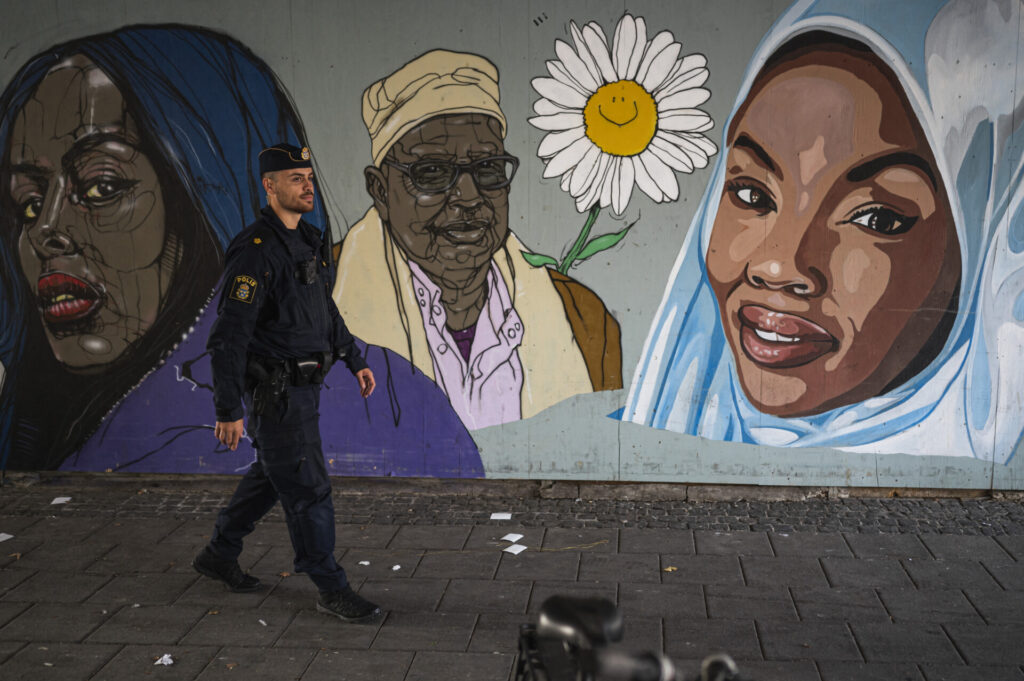
Apparently, there has been an increase in gun violence and homicides in Stockholm County, which is linked to gang rivalries. “Violent incidents have occurred in public areas, including bars and restaurants.” (https://travel.gc.ca/destinations/sweden). I am minorly concerned about being in the wrong place at the wrong time. However, I also know that these incidents are rare and often spun by those in power to promote certain narratives.

A police officer patrols the immigrant borough of Rinkeby, in Stockholm. From: https://newlinesmag.com/reportage/the-unraveling-of-swedens-great-society/

Anti-immigration sentiment

This master’s thesis from a student at Uppsala University discusses the uptick in anti-immigrant sentiment in Sweden, and how it is connected to media presentation of gang-related shootings. Swedish mass media often subtly presents shootings as an issue of immigration, highlighting when shooters are first- or second-generation immigrants to Sweden.

I recently spoke to a Swedish woman who “warned” me about how some immigrants can be “dangerous,” specifically talking about men who had come from Syria, Somalia, and Afghanistan. She said that I should be careful as a woman in Sweden, especially in the big city, where there are more immigrants. I didn’t know what to say to her, and it was a little awkward. I think that Sweden has been a very homogenous society for so long, and that there are tensions with the arrival of refugees and immigrants that cannot be separated from issues of racism and xenophobia.

Excerpt from fantastic YouTube video about the anti-immigration sentiment in Sweden, https://youtu.be/YzWFxsvuq4Y?si=mMbW6qPKORLqIu35

This article from The Guardian shows the real-life impact of new Swedish immigration legislature on a family from Uzbekistan: https://www.theguardian.com/world/2026/jan/24/a-lot-of-fear-the-families-bearing-brunt-of-swedens-immigration-crackdown.

Sofiye, who has three children, arrived in Sweden from Uzbekistan as an asylum seeker in 2008, and for much of that time she was able to build a life in the Scandinavian country. The family lived in a flat in a Stockholm suburb and Sofiye worked for the municipality in the home help department. She learned Swedish and her children went through the Swedish school system. Her youngest son was born in Sweden and her 18-year-old son, Hamza, who is studying in college to be a technician, doesn’t know life anywhere else.

Three years ago, however, after unsuccessfully seeking refugee status four times, Sofiye lost her right to work and is now living under the threat of a deportation order. For the last two years she and two of her children have been living in limbo in an asylum return centre in an industrial area near Stockholm’s Arlanda airport.

The situation is causing her so much anxiety that for the last two months she has lost her appetite and been vomiting with stress. As she spoke to the Guardian she held a plastic bag into which she regularly retched.

https://www.theguardian.com/world/2026/jan/24/a-lot-of-fear-the-families-bearing-brunt-of-swedens-immigration-crackdown

I had no idea about these issues in Sweden until recently. I think that a lot of people have a picture of Sweden as an inclusive, open, liberal utopia. But it is not immune to the challenges that we’re seeing around the world, like the rise of nationalism.

Further reading:

https://www.cnbc.com/2024/10/07/swedens-immigration-stance-has-changed-radically-over-the-last-decade.html

https://newlinesmag.com/reportage/the-unraveling-of-swedens-great-society

Free Inquiry #4: Putting it all together (Canada vs. Sweden, cultural differences edition)

Canada vs. Sweden at the 2025 4 Nations Face-Off: https://www.sportsnet.ca/nhl/article/canada-sweden-thrilled-by-pace-of-play-at-4-nations-its-not-an-all-star-game/

Hej! As of Tuesday, March 10, I have a 45-day Swedish streak on Duolingo. Today, I learned the words en servitör (a waiter), en läkare (a doctor), en bonde (a farmer), and, perhaps most valuable for my upcoming practicum, en lälare (a teacher)!

Putting it together – cultural differences to be aware of as I embark on my Swedish practicum

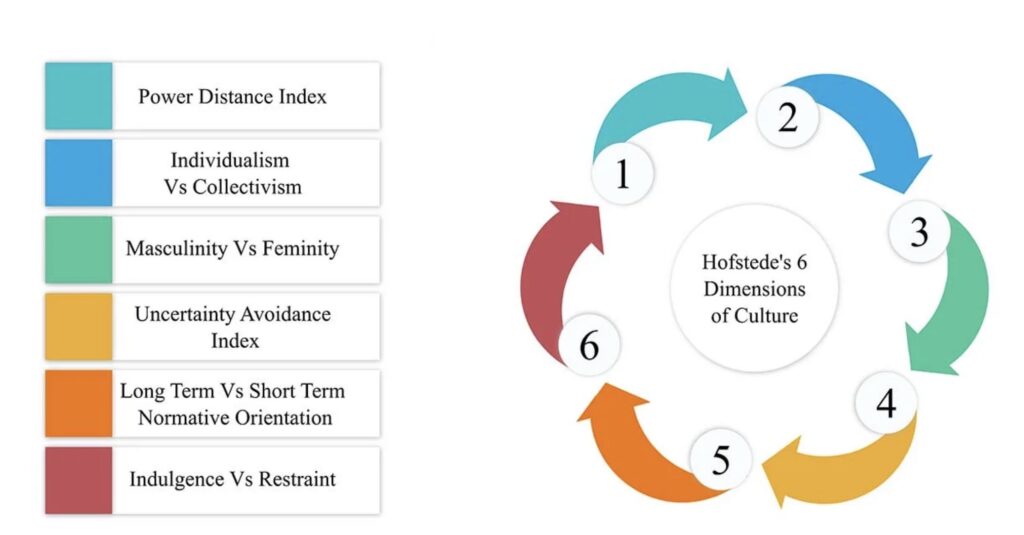
I didn’t want to speculate widely on the cultural differences between Sweden and Canada, and I wanted some way to focus my research, because I depart for Sweden very soon! So, I looked into some models of cultural differences that originate in social psychology. One of these is Hofstede’s Cultural Dimensions Theory, a widely used network that scores countries from 0-100 on six dimensions. I used these quantifiable measures to compare Sweden and Canada to build the knowledge aspect of my cultural intelligence, as well as to help develop a strategy for appropriate behaviour in situations I’ll encounter during practicum.

You can use this

A diagram of Hofstede’s Cultural Dimensions, from https://www.simplypsychology.org/hofstedes-cultural-dimensions-theory.html

Power Distance: how authority is distributed

  • Sweden: 31
  • Canada: 39

Both countries have low power distance, which means people expect equality and approachability from leaders. However, Sweden is even more egalitarian. Swedish workplaces (including schools) often have flat hierarchies and informal relationships with bosses/profs/teachers.

I recently got in touch with someone who did a practicum in Sweden last year – she said that all the teachers went by their first names, and that there was no dress code – even administrators often wore jeans and flip flops to school! This could be an adjustment for me as a Canadian, where we have slightly more hierarchy – most teachers I’ve met here go by last names and expect “respect” from students.

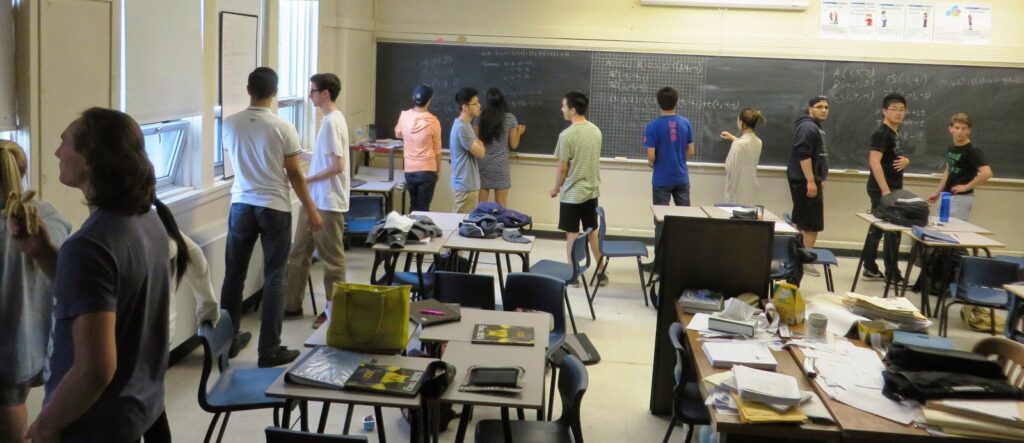
“Defronting the classroom”: a concept from Peter Liljedahl’s book on Building Thinking Classrooms. This could be a way to be responsive to cultural norms on my practicum – instead of standing at the front of the classroom as an authority figure demanding respect, I could encourage students to move around and explore concepts collaboratively.

Individualism vs. Collectivism: the degree of integration into groups

  • Sweden: 71
  • Canada: 80

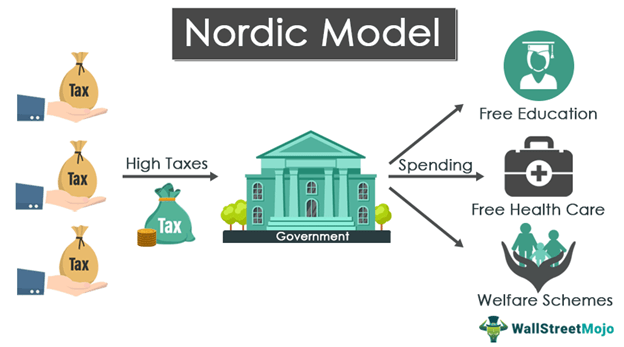
Both cultures are very individualistic, but Canada is slightly more individualistic, which means we emphasize independence and personal achievement more than Swedes do. I can see this reflected in the Nordic model, which is not socialism, but a high-tax welfare state with a strong social safety net. I heard that schools are well-funded, and students and teachers all receive delicious and nutritious free lunches! Yay!

Diagram explaining the Nordic Model (https://www.wallstreetmojo.com/nordic-model/)

Motivation towards Achievement and Success

Note – this dimension was originally called Masculinity vs. Femininity, which is less of a mouthful, but very binary – the names reflect a rigid, traditional sense of gender roles. Here, we should recognize that Hofstede created his framework in the 1970s/80s. Despite the original name of this dimension, it is still valuable.

  • Sweden: 5
  • Canada: 52

Wow! A big difference here. Sweden is extremely oriented towards cooperation, modesty, and work-life balance. It is considered rude for work to impinge on personal commitments. Canada tends to prioritize performance and ambition and success more than quality of life – noooooo!!!

Uncertainty Avoidance: a society’s tolerance for risk and ambiguity

  • Sweden: 29
  • Canada: 48

Both Canada and Sweden are are relatively comfortable with uncertainty, but Sweden is more relaxed. This might mean that Swedes tolerate less rigid structures, while Canadians plan more and like clearer rules and procedures. I can see this resulting in a relaxed atmosphere in my practicum school.

Long-Term vs. Short-Term Orientation: how a society prioritizes future rewards or instant gratification

  • Sweden: 53
  • Canada: 36

Here, Swedish culture is more focused on the long-term. This makes sense, as Sweden is known for its focus on sustainability (e.g., Greta Thunberg’s climate crisis activism). In Canada, we are slightly more short-term oriented and focused on quick results. Here is the link to a picture book on Greta Thunberg that I would totally read to my practicum students – except, they are in Grades 7-9, so they might be too old (and know too much about Greta Thunberg as fellow Swedish youth) to properly enjoy it: https://youtu.be/07PJDi_vcv4?feature=shared.

Indulgence vs. Restraint: the extent to which a society allows relatively free gratification of basic human drives

  • Sweden: 78
  • Canada: 68

Both countries have indulgent cultures – people value having fun and freedom. Sweden scores slightly higher, which I think is good for me as I head out on practicum, because I tend towards hedonism – I am a huge advocate of having a good time!

I’ve also read that Swedes place high value on leisure time, happiness, and self-expression. Sweden always ranks high on the quality of life index. It’s also one of the most tolerant countries in terms of gender identity and sexual orientation. Same-sex sexual activity was legalized in Sweden in 1944 (woah!) and gay marriage has been legal since 2003. Personal freedom is very important to Swedes.

That’s all I’ve got for now! I can’t wait to see what the culture is like in Sweden – because I can do as much research as possible, but I won’t really understand until I experience it first-hand!

Vi ses!

Macy
Free Inquiry #3: Cultural Intelligence (which is abbreviated to CQ, for some reason!)

Hey! Mitt namn är Macy. Valkommen till min tredje blogg. Here’s my Swedish update – I have a 41-day streak on Duolingo. We’re still learning all about food – this is a common theme!

According to Google’s AI overview, “Swedish cuisine centers on fresh, hearty, and simple home-cooked meals (husmanskost), heavily featuring potatoes, fish (salmon, herring), dairy, berries, and meatballs.”

New Swedish words unlocked!

  • Mums – yummy
  • Ost – cheese
  • Meny – menu
  • Hungrig – hungry
  • En tårta – a cake
  • Ursäkta – excuse me
  • Mer – more
  • Kött – meat (pronounced like Shot)
  • En sallad – a salad (which I don’t think I’ll be ordering much, haha!)

Remember how my second driving question centered around the differences and similarities between Swedish and Canadian culture? I don’t want to neglect this aspect of my free inquiry, because I think it’s equally – if not more – important than my language learning journey.

Recently, I attended a workshop at UVic on cultural intelligence, or “CQ.” It makes me mad that the acronym isn’t CI, but I understand that CQ is borrowing from the “Q” of “IQ”, eating stands for intelligence quotient. Something similar happened when psychologists studying personality and cognition coined the term emotional intelligence (also EQ, not EI). The CQ workshop was fantastic and I learned a lot.

The cultural intelligence framework UVic follows breaks intercultural contentment into four practical parts:

Elements of Cultural Intelligence (CQ)

  1. Drive
  2. Knowledge
  3. Strategy
  4. Action

Cultural Intelligence (CQ)

Drive – intercultural motivation

To succeed in a new culture, you need to be motivated to learn about where you are, who you’re around, and basically what’s going on in the world. This comes from more than just being “open-minded” – you can build intercultural motivation by exploring your environment and talking to people from different backgrounds.

Knowledge – awareness of different cultures

Intercultural knowledge is the understanding piece. When I first started my inquiry project, my intercultural motivation was high. I chose to do an international practicum because I want (very badly!!!) to explore the world outside of my context and immerse myself in a new culture. However, my intercultural knowledge was admittedly lower. Intercultural knowledge means recognizing and understanding how things like communication styles and workplace norms vary across cultures. Knowing the language of the place you’re visiting also falls under here – or at least, some language basics. This is why I chose to inquire into Swedish language and culture. I had NO IDEA what the norms and expectations were in Sweden – I didn’t grow up with Swedish friends, I’ve never been to Scandinavia in general, and I really only had a stereotypical understanding of Sweden – hockey, IKEA, meatballs, and ABBA!

“Take a Chance on Me” by ABBA. I plan on visiting the ABBA museum in Stockholm if I get some free time during my practicum. I grew up listening to ABBA and I think that they are the most popular musicians to ever come from Sweden – although pop star Zara Larsson is blowing up globally today!

Strategy – planning ahead for intercultural experiences

This aspect of CQ focuses on self-awareness and planning. Travellers/people interacting with those from other cultures need to be aware of their own assumptions and shed light on them. That’s like me realizing that I don’t know much about Swedish identity and daily life, just what I’ve seen in the media – hockey, ABBA, etcetera. Instead of just showing up in Stockholm with no understanding, I’ve made a plan to approach intercultural interactions with curiosity and background knowledge – which I’m gaining through my inquiry project!

Action – acting appropriately

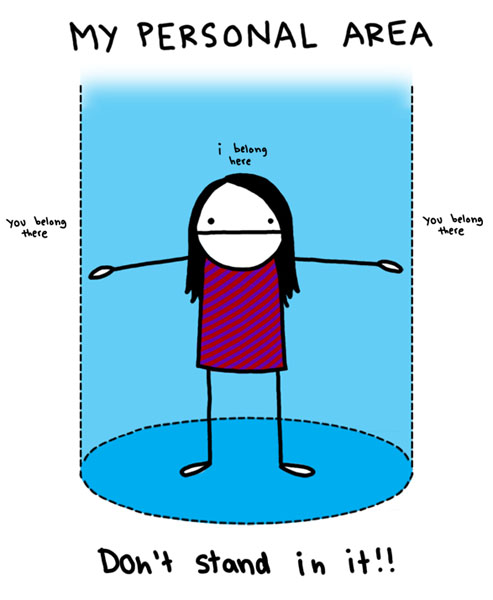
This is the part of CQ that you can see. Appropriate behaviour is flexible and culturally responsive. Here’s an example – I learned in one of my social psychology classes in undergrad that certain cultures have larger “personal bubbles” than others. Generally, Western cultures (e.g., Canada, UK, USA) prefer more physical space when interacting with others (2-3 feet). Latin American, Middle Eastern, and Mediterranean cultures are sometimes called “low-distance cultures” because they typically have smaller, more flexible personal bubbles, allowing for closer conversation and more physical contact. So, it might come off as rude for me as a Canadian to visit Belize and stand very far away from someone I’m conversing with. Vice versa, my friend Fernanda, whose family is from Mexico, has noticed that her touchiness (e.g., a pat on the arm) is sometimes misinterpreted in Canada as romantic interest or a violation of personal space, even though it’s just part of how she communicates with friends. Someone with high cultural intelligence is able to recognize these differences in appropriate behaviour and show flexibility, adjusting how they interact accordingly.

You can read more about cultural intelligence (CQ) on this UVic webpage: https://www.uvic.ca/career-services/build-your-career/using-competencies/cultural-intelligence-competencies/index.php

Stay tuned for my next blog post, where I will continue developing my cultural intelligence in preparation for my international travels!

Free Inquiry #2: Sounding Swedish – a, å, and of course, ä

Image from https://www.tallink.com/destinations/sweden

Hej! Hur mår du? Jag mår bra. (Hi! How are you? I’m good).

I haven’t made an inquiry blog post for a while, but that doesn’t mean I haven’t been busy inquiring into Swedish language and culture. I’m approaching a month into my language learning journey – I just notched my 25th day of Duolingo. I’ve been aiming for one mini lesson a day, which takes me around 5 minutes. I’m definitely making progress, but slowly.

Screenshot

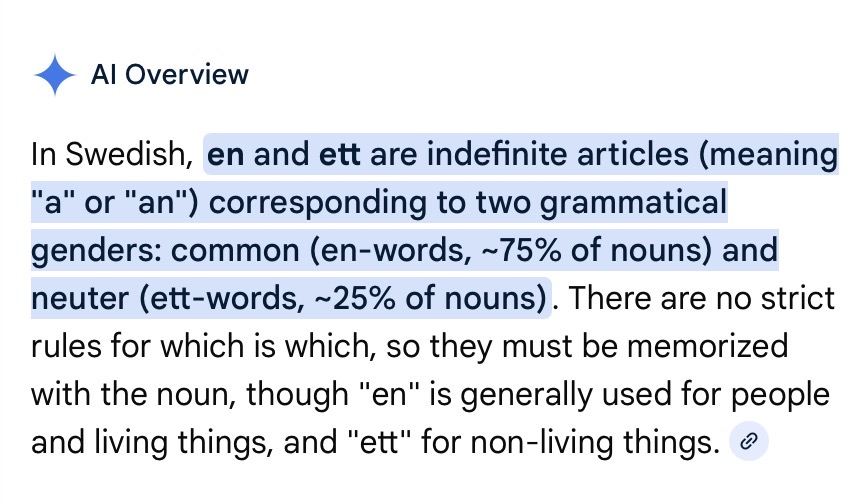
Duolingo’s approach is interesting in that it teaches individual words and phrases, but no grammar. I find myself wondering about syntax a lot… for example, I’ve gathered that sometimes, the “a” before a noun in Swedish is “en,” and other times, it’s “ett.” I couldn’t figure out the pattern, so I looked it up. And turns out, there isn’t much of a pattern at all. Unlike in English, where “a” precedes a word starting with a consonant and “an” precedes a vowel, Swedish speakers have to memorize when to use each version. “En” is more common (which I’d already gathered from seeing it pop up frequently in my Duolingo lessons), and “ett” is only used 25% of the time. Often, “ett” belongs with non-living things and “en” with living things, like “en hund” (a dog).

AI overview for the search query, “difference between en and ett in Swedish”

Thanks, AI overview!

I’ve noticed that Duolingo’s approach to teaching languages seems to rely on users gradually picking up words and phrases and filling in the blanks using pattern recognition. There’s no explicit teaching, which honestly, I might appreciate. I would love to learn how Swedish works phonetically, like, What is the difference between a, ä, and å in terms of sounding out a word? I think some knowledge of the phonemes that make up the Swedish language could be helpful as I approach unfamiliar words like place names (e.g., I don’t want to embarrass myself by majorly mispronouncing someone’s hometown or the name of a train station I’m trying to get to).

New words and phrases unlocked

  • Sverige = Sweden
  • Min man = my husband
  • Min fru = my wife
  • En hund = a dog
  • Lång = tall
  • Rolig = funny
  • Smärt = smart (duh!)
  • Snäll = nice
  • Från = from
  • Hur mår du? = How are you?
  • God kväll! = Good evening!
  • Vi ses! = See you!
  • Bra = good

So now, I can say, “My husband from Sweden is tall and funny!” Min man från Sverige är rolig och lång! Just kidding, I do not have a husband from Sweden (Yet! Growth mindset!).

Plus: Following Team Sverige in the Winter Olympics

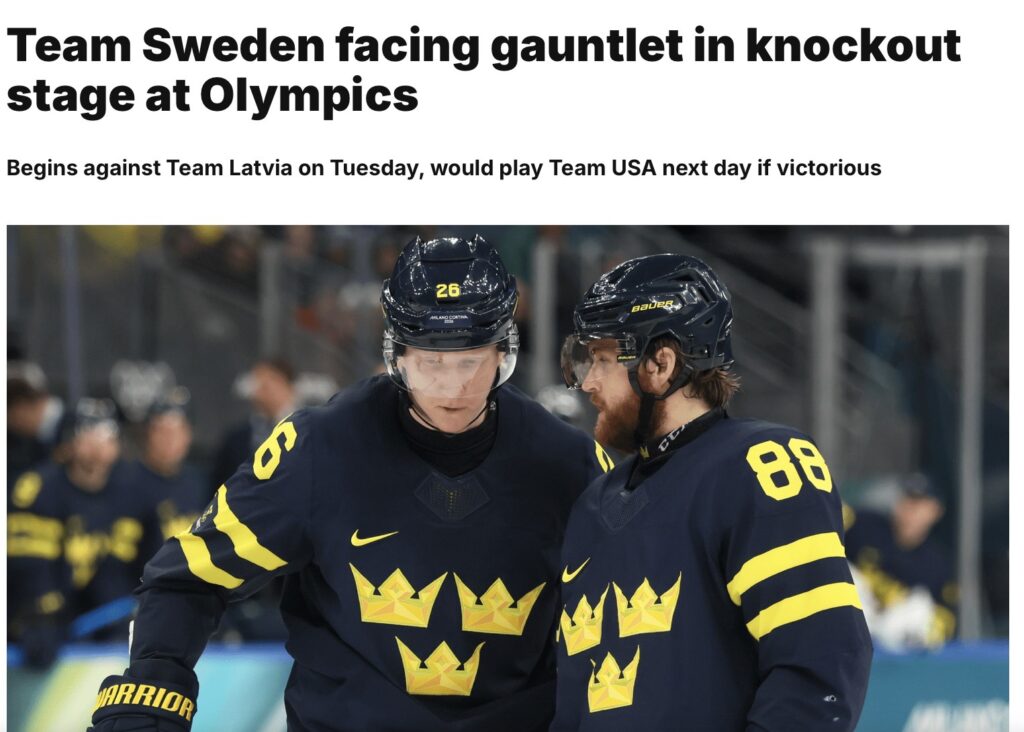
The Swedish men’s hockey team plays their first elimination game of the 2026 Olympics on Tuesday and I’m planning on tuning in! They take on Latvia, and the winner will face tough competition in the quarterfinal – the #2 seeded Americans.

According to The Player’s Tribune (I found this great article written by NHL player Victor Hedman), ice hockey is a cornerstone of Swedish culture. It is deeply woven into the national identity and Sweden has a reputation for producing top-tier NHL players. I grew up in Vancouver idolising Daniel and Henrik Sedin and cheering them on as they took the Canucks to the Stanley Cup Finals. I’m excited to connect with my students in Sweden over hockey!

Photo from https://www.nhl.com/news/sweden-facing-gauntlet-in-milano-cortina-knockout-stage

Sounding it out

Back to the phonics thing… as part of our PDPP course load, my cohort is currently taking a course in reading. We’ve talked extensively about how to teach phonological awareness, phonemic awareness, and skills like word attack to early primary students. Here’s what I found on the web about Swedish letter sounds:

Det Svenska Alphabet (The Swedish Alphabet)

Video: https://youtu.be/aGoC_gVjdr4?si=JhybGoqLinv-UgB7

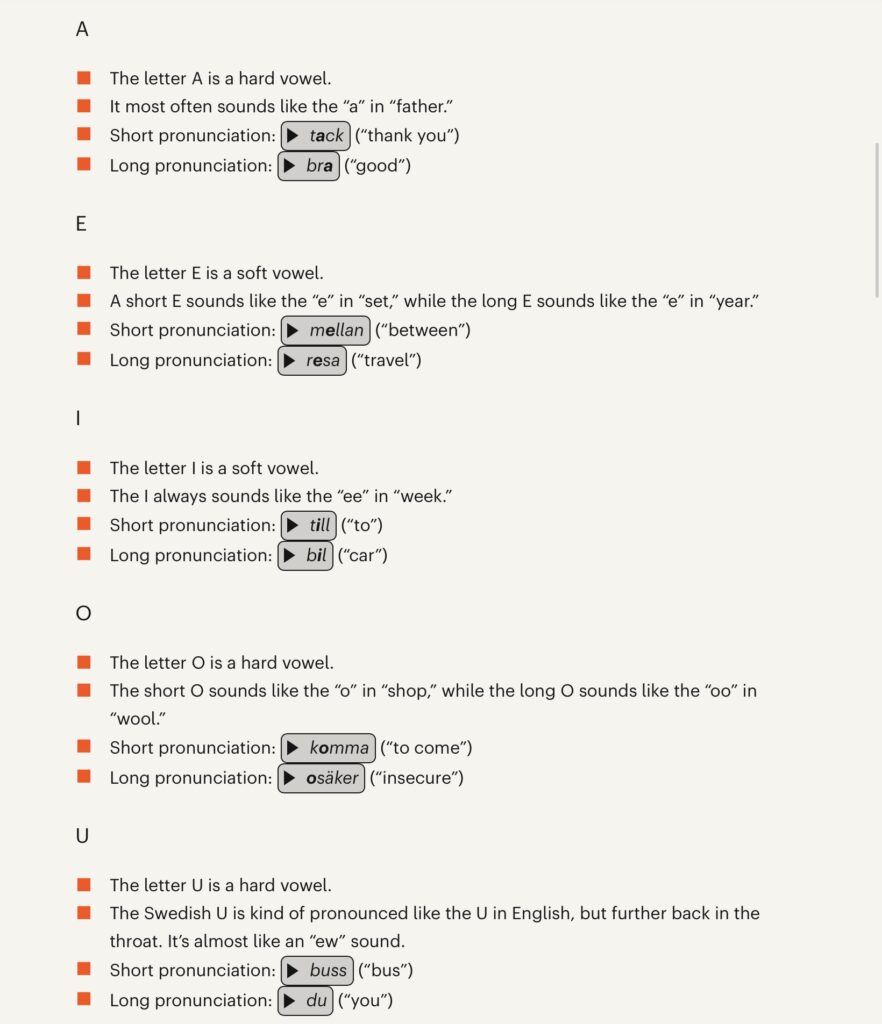
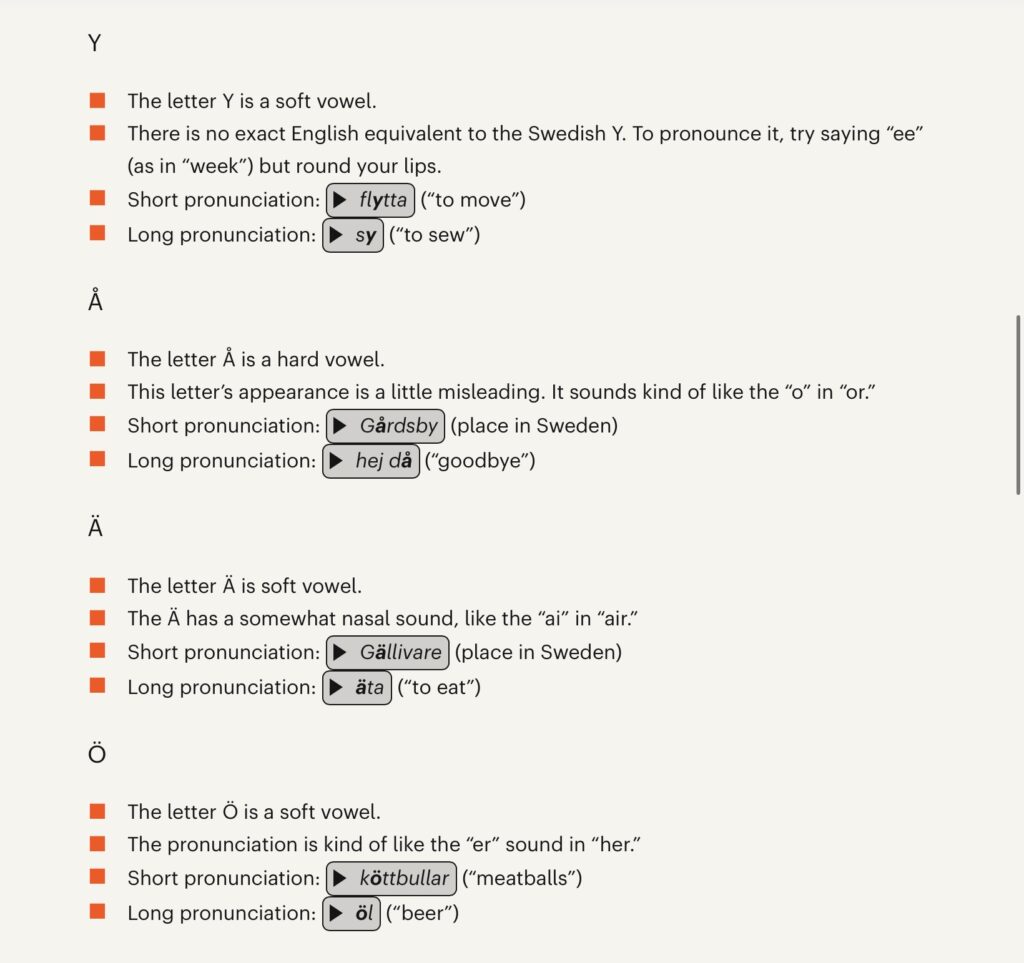
I also looked at an article by a Babbel contributor about Swedish letter sounds – it was very helpful. Here is a short guide on how to pronounce the vowels in Swedish:

Vi ses! (See ya!) – Macy

Free Inquiry #1: Duolingo, kaffe, and fika

Welcome to my inquiry! Välkommen! My name is Macy and I’m a teacher candidate at the University of Victoria. I’m gearing up to my first practicum in April in Stockholm, Sweden! That’s right – Sweden!

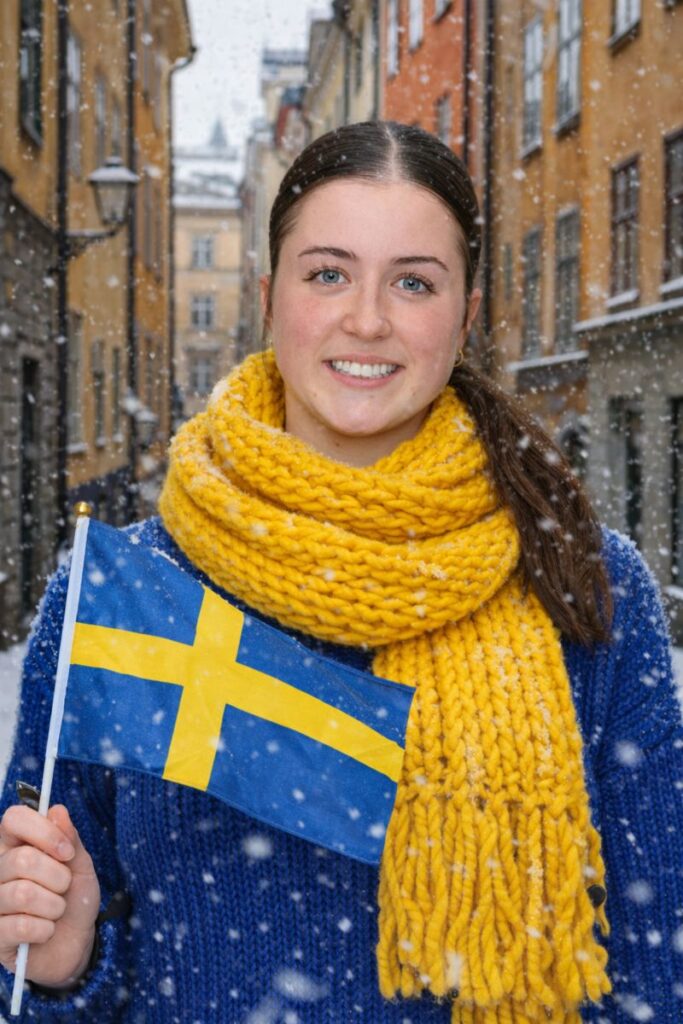
AI-generated photo of me in Sweden! Prompt given to ChatGPT: Generate photo. Put her in a blue knit sweater and a big chunky yellow scarf. Background: streets of Gamla Stan, Stockholm. Make it snowing. She is also holding a Swedish flag. 

When I started the BEd Post-Degree Professional Program, I didn’t know that there was an option to go abroad for the 6-week practicum. Part of why I applied was on a whim. I’ve barely traveled at all – unless you count when I was a young child (my dad played professional basketball in Europe and I lived in England and Spain as a youngster). I’ve essentially been in North America ever since, save a school trip to Venice in 2018). In fact, I haven’t been on a plane since 2019 – that’s one of my go to two-truths-and-a-lie statements. I feel like I haven’t had the transformative experience of solo travelling that a lot of my peers have had. Although I’m so grateful for my life in Victoria, I think a little exploring is long overdue.

My bigger reason for choosing an international practicum placement was to broaden my horizons. I’m ashamed to say that I know very little about Swedish culture. However, I have always been curious about Scandinavia and interested in its history (Vikings!!!). I’m professionally fascinated by the school systems in Scandinavia. I remember meeting an elementary school friend who’d recently emigrated to Vancouver from Finland. Alex constantly raved about how school back home was so much better. I’ve heard this statement echoed countless times since – in news articles, in sociology textbooks during my undergrad, and by pretty much anyone who I’ve told I’m headed to Sweden for my practicum.

Eklidens Skola, one of the largest high schools in Stockholm, where I’ll be a student teacher this April/May!

An Inquiry into Swedish Culture and Language

I hope to learn from my mentor teacher (and students) at Eklidens Skola in Stockholm and bring what I learn back to my colleagues here in Canada. I also hope to gain experience and understanding of what it’s like to be new to a country and unfamiliar with the language. That way, I can better understand and support my future students who are newcomers and/or learning English as an additional language.The crux of my inquiry will be exploring Swedish language and culture. I have always been interested in language acquisition, but I only speak English. I figured this inquiry project could be a chance to…

  • Challenge my brain: Research from York University suggests that learning a second language in adulthood can thwart the onset of dementia. I have experience with Alzheimer’s disease and I am very interested in preventive health and all the ways that people can boost their cognitive reserve.
  • Prepare for the culture shock that might await me in Stockholm: in my next blog post, I plan to investigate the idea of cultural intelligence (CQ) and develop knowledge of behavioural preferences/values in Sweden that might differ from what I’m used to in Canada.

Inquiry-based learning centres around driving questions. I started my inquiry project with a topic – Sweden! But I’ve been developing some open-ended questions to guide my research:

How might someone acquire a rudimentary understanding of a new language, starting from scratch, as an adult?

guiding question #1

How are Swedish and Canadian culture different and the same?

Guiding question #2

How does the landscape affect how people gather and celebrate?

GUIDING question #3

Learning Swedish

I started my Duolingo journey this week, and I have a 7-day streak – yay! The Duolingo owl is persistent, and the app does a great job of gamifying language learning. Gamification is actually something I’m very interested in as a pedagogical approach (maybe I’ll write another blog post about this later). I am getting frustrated with how slowly Duolingo is progressing… it doesn’t feel like I’m levelling up. That being said, I do feel like I have a strong grasp of the few words it has taught me so far.

The first thing Swedish Duolingo teaches you is how to order items at a café or a bar, which I find interesting. Here are the words I’ve learned thus far:

vatten – water

öl – beer

vin – wine

bröd – bread

mjölk – milk

kaffe – coffee

hej! – hello

hej da! – goodbye

tack – thank you/please

välkommen – welcome

och – and

Typing, selecting, and speaking the word kaffe over and over again on my iPad had me thinking that coffee must be an important part of the average Swede’s daily life. A family friend of mine is in the Gustavson School of Business here at UVic, where it’s common for students to do semesters abroad, and she studied in Sweden this fall. I remember seeing an Instagram post of hers about a Swedish custom called fika.

“kaffe och mjölk”

Practicing my pronunciation – play the voice recording to learn how to say coffee and milk in Swedish! It’s quite close to English.


Turns out that Duolingo is onto something – coffee IS big in Sweden!

Image from https://zwarteroes.nl/en/blogs/koffie-feiten/what-is-swedish-fika-coffee?country=NL

Fika

A cherished tradition where Swedes take a mandatory daily break to sip coffee or tea and have a sweet treat with friends, family, or colleagues. Fika is a “coffee break,” but it’s equally (or more) about social connection and pausing to rest than it is about hitting your caffeine quota.

Swedish sweet treats: kanelbullar (cinnamon buns) and chokladbollar (chocolate balls)

Read more about fika here: https://visitsweden.com/what-to-do/food-drink/swedish-kitchen/all-about-swedish-fika/

Now, if you’ll excuse me, my PDPP peers are waiting to chat with me over coffee! I think it’s interesting that coffee and treats with friends has a name in Sweden – that signifies its importance and the fact that catching up is a priority! I think I’m going to like fika!

Tack! Hej da!

Macy
© 2026 Learning with Macy
Theme by Anders NorenUp ↑